
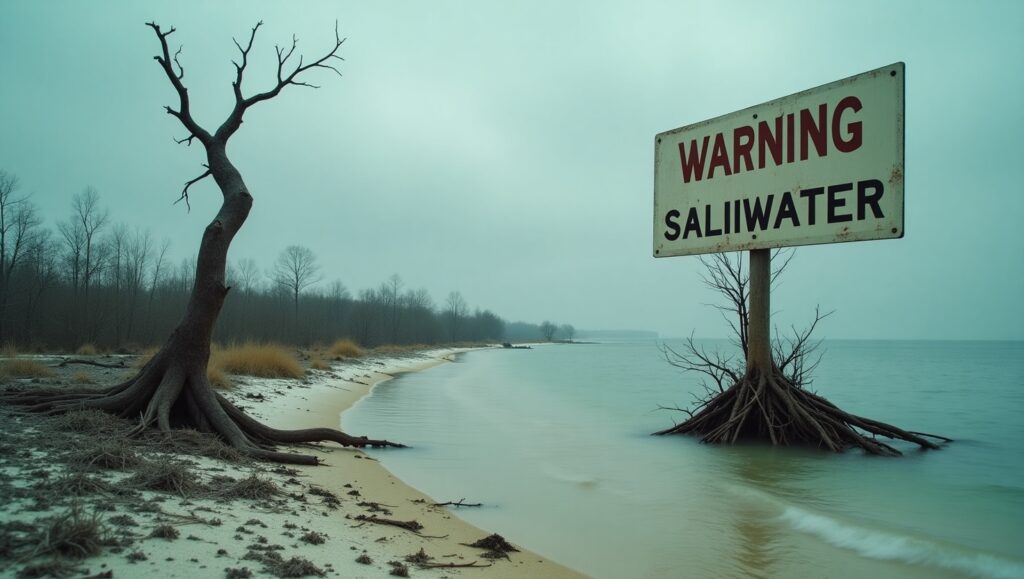
Coastal Salinization: A Growing Threat to Our Freshwater Resources
Table of Contents
ToggleIntroduction
Coastal salinization isn’t just a buzzword; it’s an alarming reality that threatens the essence of life itself — freshwater. As sea levels rise, thanks to global warming, saltwater is increasingly encroaching upon our precious freshwater reserves. This creeping menace, known as coastal salinization, could deplete our freshwater faster than we’ve imagined and wreak havoc on communities and ecosystems alike. Did you know that over 500 million people are already feeling the environmental impact of this surreptitious intruder? The connection between global warming, extreme weather events, and freshwater depletion underscores a stark reality: our water resources are under siege, and if we don’t act now, the consequences could be irreversible.
Background
Coastal salinization is akin to the slow yet inevitable spoilage of a carefully preserved food supply. As climate changes accelerate, so do the processes of salinization in vulnerable coastal regions. Rising sea levels, intensified by global warming, are pushing saltwater further inland, contaminating freshwater aquifers and soils source. The primary culprits—storm surges, reduced freshwater flow, and increasingly frequent extreme weather events—are aggravating this intrusion. According to recent studies, a staggering 500 million people are at risk, particularly those residing in low-lying deltas where the sea meets the land source.
Trend
Let’s zoom into the Bengal Delta of Bangladesh, a crucible for understanding coastal salinization trends. Here, the relentless rise of sea levels, compounded by climate change, has made saltwater intrusion a daily battle. Recent findings highlight how salinity levels have been steadily climbing since the mid-2000s, often reaching farther inland than previously anticipated source. Studies indicate that major causes such as storm surges, exacerbated by natural water flow reduction, are contributing heavily to this crisis. For communities in these regions, the phenomenon isn’t just an environmental concern—it’s an existential threat source.
Insight
The implications of coastal salinization stretch far beyond geographic boundaries. Imagine agriculture—the backbone of many economies—being crippled as crops fail to take root in saline-infected soils. In regions like the Bengal Delta, farmers face this grim reality every planting season. The salinization of freshwater also inflicts a brutal toll on public health as it diminishes access to potable water, raises the risk of water-borne diseases, and fosters socio-economic instability. Dr. Mohammad Hoque, a leading researcher in this field, emphasizes that salinity is rising faster and reaching farther inland than many realize, signaling a need for urgent intervention source.
But there is a glimmer of hope. Integrated approaches proposed by researchers like Dr. Hoque advocate for blending traditional knowledge with modern science to devise resilient solutions. These include the use of salt-tolerant crops, improved water management practices, and the construction of defensive barriers against salinity intrusion source.
Forecast
Looking ahead, the forecast for coastal salinization appears bleak if we remain passive. Without proactive measures, salinity intrusion could render vast swathes of agricultural fields barren, compromise freshwater availability, and displace millions—birthing a humanitarian crisis of epic proportions. Researchers predict that if unchecked, these changes will not only stress natural resources but could also ignite socio-political unrest, especially in densely populated areas dependent on already scarce freshwater supplies source.
What needs to happen? Global coordinated responses, much like the Noah’s Ark of old, to protect and preserve our freshwater resources. Governments, scientists, and locals must collaborate, breaking down silos to address salinization as part of a larger climate adaptation strategy.
Conclusion and Call to Action
In summary, coastal salinization is not a problem for tomorrow. It’s a crisis for today, threatening our freshwater resources and destabilizing livelihoods globally. The takeaway is clear: We must act now. Whether it’s advocating for policy changes, investing in research, or supporting local adaptation initiatives, each action counts.
Feel compelled to join the cause? Learn more about how you can contribute to solutions and stand united against the threat of coastal salinization. Your voice and action can make a difference.
For inquiries, quotes, or bulk solutions, visit us here for more information.
Related Articles
– Title: \”Salinization in the Bengal Delta: An Emerging Global Threat\”
– Read more here
Engage with these resources and arm yourself with knowledge. Together, we can turn the tide against coastal salinization.
