
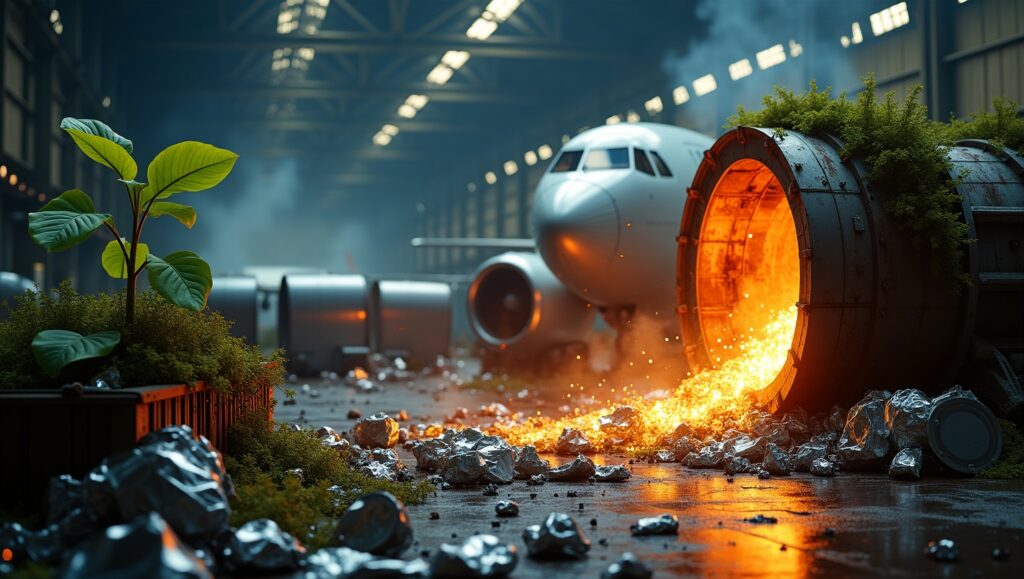
The Lifecycle of Aluminum: From Production to Eco-Friendly Aviation in the UAE and Sharjah
Table of Contents
ToggleIntroduction
Aluminum is a cornerstone material in modern industry, revered for its versatility and robustness. Particularly in the aviation sector, aluminum’s properties—lightweight, corrosion-resistant, and durable—make it indispensable. However, as the world grapples with environmental challenges, aluminum recycling emerges as a pivotal solution to mitigate the ecological footprint of industrial activities.
In the UAE and Sharjah, where sustainability is a key national agenda, recycling aluminum can significantly curtail resource consumption and bolster eco-friendly initiatives. Al Zuhour Al Hamra Metal Scrap Tr. LLC (AZSCRAP) stands at the forefront of this movement, championing sustainable practices by continuously innovating their recycling processes. As a leader in the UAE’s scrap metal recycling industry, AZSCRAP’s initiatives enhance aviation sustainability while reducing the industry’s environmental impact.
Background
Understanding the lifecycle of aluminum from production to recycling offers insight into its sustainability benefits. Initially derived from bauxite ore, aluminum production is energy-intensive. However, recycling aluminum uses only about 5% of the energy needed to produce new aluminum from raw ore, making it a crucial practice in reducing both energy consumption and costs.
In aviation, aluminum’s role is unparalleled. Its lightweight nature reduces aircraft weight, leading to better fuel efficiency and lower carbon emissions. Furthermore, its corrosion resistance enhances the longevity of aircraft components. However, the environmental repercussions of extracting and processing virgin aluminum demand effective recycling solutions.
Recycling aluminum not only preserves natural resources but also minimizes waste, playing a critical role in the UAE’s sustainability efforts. In Sharjah, for instance, committed recycling practices driven by companies like AZSCRAP have resulted in significant economic and environmental advancements. Just as a well-seasoned chef can whip up a delightful meal from leftovers, recycling converts used aluminum into a resource, ready to be used anew, and AZSCRAP is the maestro orchestrating this transformation in the region.
Trend
In recent years, the aviation industry has seen a surge in eco-friendly aviation practices, with aluminum recycling taking center stage. This trend mirrors a broader global shift towards sustainable practices, as companies recognize the long-term benefits of environmental stewardship.
The UAE’s commitment to sustainable aviation solutions has prompted a wave of initiatives focused on minimizing environmental impact. AZSCRAP’s innovative recycling processes and strategic partnerships are at the forefront of these trends. By collaborating with aviation companies, they streamline the recycling process to ensure aircraft aluminum waste is effectively recycled, reducing the burden on landfills and the demand for new raw materials.
Much like a community working collectively to build something of value, the participation of key industry players, led by AZSCRAP, ensures the successful implementation of sustainable practices. The aviation industry’s ongoing transition to greener methods demonstrates the significant value derived from enhanced aluminum recycling efforts.
Insight
The impact of aluminum recycling extends beyond environmental benefits, reaching into economic realms, especially in Sharjah and the UAE. When aluminum is recycled, it directly contributes to local economies by creating jobs within the recycling industry and reducing manufacturing costs.
AZSCRAP’s successful projects exemplify the considerable benefits of recycling. They highlight how recycling can expand economic opportunities while promoting environmental health. By transforming used metal into valuable resources, AZSCRAP supports the local economy and fosters a culture of sustainability that’s crucial for future generations.
Imagine a small town where every household recycles diligently, leading to cleaner streets, healthier air, and thriving local businesses repurposing recyclable material. AZSCRAP’s community-driven approach to recycling in the UAE mirrors this model, showing how concerted efforts can drive significant community and environmental gains.
Forecast
Looking ahead, the future of aluminum recycling in the UAE and Sharjah appears promising. Anticipated growth and innovations in the field are poised to elevate the region’s standing as a leader in eco-friendly aviation solutions. The increasing importance of recycled aluminum, spurred by sustainability incentives, will continue to bolster the aviation industry’s green transition.
AZSCRAP is set to play a pivotal role in shaping the future of sustainable waste management. Through cutting-edge recycling technologies and forward-thinking strategies, AZSCRAP will drive the region’s recycling capabilities, ensuring that even more aluminum waste is reclaimed and reused effectively.
Consider the gradual transformation of a garden into a vibrant ecosystem, where thoughtful cultivation and care lead to a flourishing landscape. Similarly, AZSCRAP’s ongoing efforts promise a sustainable future where aluminum recycling is seamlessly integrated into industrial processes.
Conclusion & Call to Action
In conclusion, aluminum recycling is not just an environmental imperative but an avenue for significant economic benefits and sustainable progress. As evidenced by AZSCRAP’s leadership in the UAE’s recycling efforts, the sustainable management of aluminum resources is essential for promoting aviation sustainability and resource conservation.
Join us in this crucial journey towards a greener future by embracing recycling and contacting AZSCRAP for recycling solutions. Whether you have sharjah scrap or uae scrap, or inquiries about bulk recycling solutions, AZSCRAP has the expertise to support your sustainability goals.
👉 Contact Us for inquiries, recycling quotes, or bulk scrap metal solutions.
—
Related Articles:
– For further insights into recycling practices and their economic impact, consider exploring the recycling of tungsten carbide as discussed on platforms such as Scrap Gators.
