
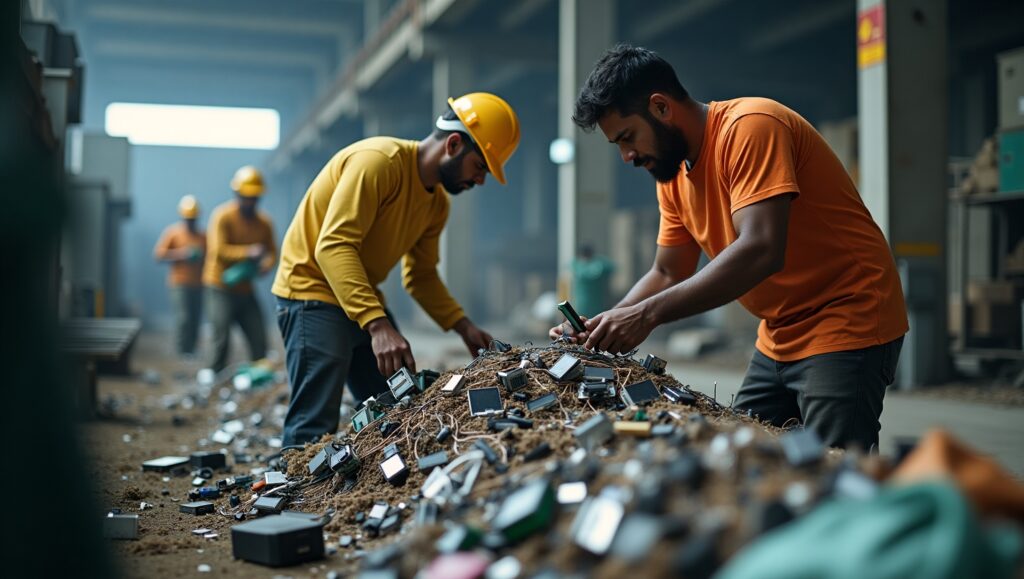
Navigating E-Waste Challenges in Sharjah: Insights from Al Zuhour Scrap
Table of Contents
ToggleIntroduction: The Growing Issue of E-Waste in the UAE
Electronic waste, or e-waste, is one of the fastest-growing types of waste worldwide, and the UAE is no exception. The rise of consumer electronics and rapid technological advancements have led to a significant uptick in e-waste. In Sharjah, managing e-waste effectively is crucial for environmental sustainability. Al Zuhour Al Hamra is a buyer and recycler of e-scrap and IT equipment in the UAE, focusing on secure data destruction and sustainable IT asset disposal. As a certified entity, Al Zuhour Scrap highlights the importance of recycling in mitigating e-waste impacts while ensuring compliance with ISO 14001/27001/45001 standards.
What is Planned Obsolescence?
Planned obsolescence is a practice where manufacturers design products with a limited lifespan, prompting consumers to replace them frequently. This strategy, while beneficial for short-term sales, significantly contributes to increasing volumes of e-waste. Understanding planned obsolescence is essential in addressing e-waste challenges, particularly in the tech-heavy regions like the UAE. By promoting sustainable technology practices, we can shift the focus from frequent replacements to long-lasting solutions.
The Impact of Planned Obsolescence on E-Waste
In the UAE, several factors contribute to e-waste exacerbated by planned obsolescence:
1. Limited Repairability: Many devices are manufactured with non-replaceable parts or complex assemblies that make repair impractical, encouraging disposal instead of repair.
2. Software Limitations: Frequent software updates often render older models obsolete as they become incompatible with new operating systems.
3. Aesthetic Trends: The drive for newer, sleeker designs compels consumers to discard fully functional devices.
These practices not only fuel e-waste but also pose significant environmental threats through the accumulation of hazardous substances found in old electronics. Al Zuhour Scrap’s certified services ensure proper recycling and disposal, adhering to rigorous environmental standards.
What are Rare Earth Metals?
Rare earth metals are essential elements used in various electronics, critical for producing advanced technology components. Understanding these metals’ roles and how they are obtained can increase awareness about the need for recycling:
Where Do They Come From?
Rare earth elements are primarily mined in countries like China, the USA, and Australia. However, mining these resources can have detrimental environmental impacts, including habitat destruction and pollution—a strong argument for recycling.
Examples of Rare Earth Metals
– Neodymium
– Dysprosium
– Lanthanum
– Cerium
Why Recycle These Rare Earth Metals?
Recycling rare earth metals is crucial for several reasons:
– Resource Conservation: Reduces dependency on new mining.
– Environmental Protection: Lessens ecological disruption.
– Economic Value: Recovered materials can be economically lucrative, supporting green business initiatives.
Al Zuhour Scrap actively participates in recovering these valuable metals, supporting a circular economy and sustainable practices in the UAE.
Products That Use Rare Earth Metals
Devices reliant on rare earth metals include:
– Computers: Used in hard drives and displays.
– TVs: Integral for LED technology.
– Cars: Essential in electric vehicle motors.
– Phones: Found in components like speakers and microphones.
How to Recycle These Products
Step-by-Step Guide
1. Collection: Gather old electronics through community programs or designated drop-off points.
2. Processing: Facilities dismantle devices to recover valuable metals.
3. Refinement: Extracted metals are processed for purity and reused.
4. Reintegration: Reintegrated into manufacturing, reducing the need for new extraction.
These steps are part of broader efforts by Al Zuhour Scrap to promote Dubai e-scrap recycling, ensuring that end-of-life products are handled responsibly.
The Environmental Consequences
E-waste contains hazardous elements such as lead, mercury, and cadmium, which can lead to pollution of soil and water sources. Additionally, the process of extracting raw materials and manufacturing new devices is energy-intensive, further straining environmental resources.
Sustainable Alternatives
Al Zuhour Scrap leads by advocating for strategies like:
– Design for Longevity: Encouraging production of durable goods.
– Enhanced Recycling Programs: Expanding UAE-based recycling efforts.
– Consumer Education: Raising awareness about the benefits of recycling and longevity of products.
– Policy Advocacy: Pushing for regulations that support sustainable practices.
Exploring these alternatives aligns with efforts to tackle e-waste head-on, offering secure and certified recycling solutions to businesses across the UAE.
How Al Zuhour Scrap Can Help Offset The Impact of Planned Obsolescence
Al Zuhour Scrap positions itself as a leader in sustainability, offering comprehensive services including secure data destruction and sustainable recycling for electronic waste in the UAE. Encouraging both consumers and businesses to participate can significantly offset the environmental footprint created by planned obsolescence.
Conclusion
Understanding planned obsolescence is crucial to addressing e-waste challenges. By integrating recycling initiatives and advocating for sustainable practices, we can reduce the environmental impact of discarded electronics. Engage with Al Zuhour Scrap for responsible e-scrap management and make a positive contribution to environmental preservation in the UAE.
👉 Contact Us for secure e-scrap collection, data destruction certificates, and corporate recycling solutions across the UAE.
For more insights, visit Understanding Planned Obsolescence in E-Waste Management.
