
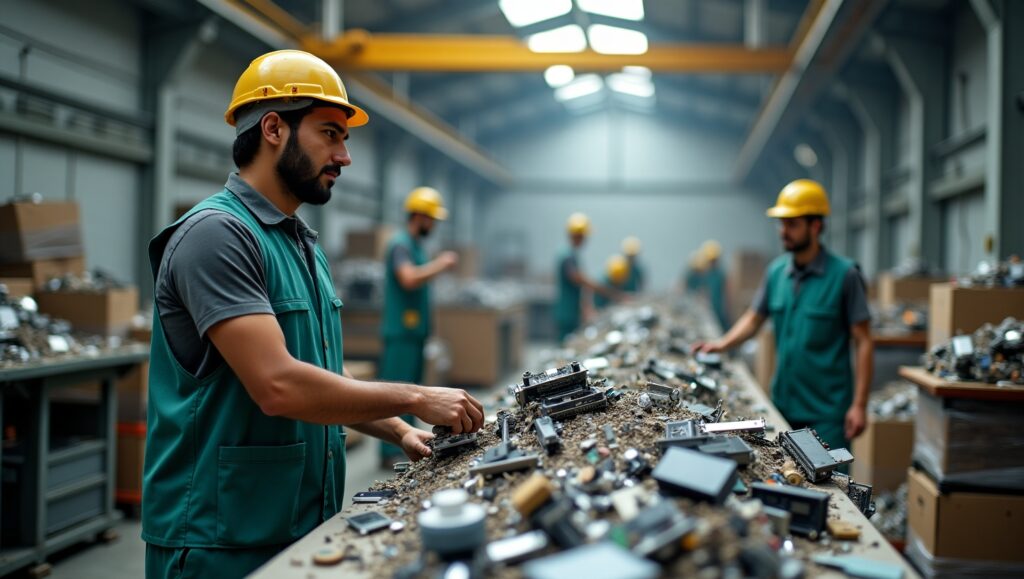
Sharjah E-Scrap Recycling: Al Zuhour Scrap and the Rise of Responsible Standards
Table of Contents
ToggleIntroduction to E-Scrap and IT Asset Disposition
In an age where technology evolves at breakneck speed, the accumulation of electronic waste (e-scrap) poses a significant challenge. E-scrap refers to discarded electronic devices such as computers, mobile phones, and other IT equipment that are no longer in use. This category of waste is an integral component of sustainable recycling practices, considering the potential environmental hazards it embodies.
Al Zuhour Al Hamra is a buyer and recycler of e-scrap and IT equipment in the UAE. As businesses increasingly rely on digital infrastructure, the concept of IT asset disposition (ITAD) becomes paramount. ITAD involves the systematic process of disposing of obsolete or excess IT equipment in a manner that prioritizes data security and environmental responsibility—an area where companies like Al Zuhour Scrap excel by providing certified, ISO-compliant recycling services.
The Role of Certification in E-Scrap Recycling
Certifications in e-scrap recycling are more than mere credentials; they serve as essential markers of compliance and trustworthiness for recycling companies. For Al Zuhour Scrap, being a certified buyer and recycler of electronic waste and IT equipment demonstrates a steadfast commitment to data security, sustainability, and adherence to international standards such as ISO 14001, 27001, and 45001.
Certifications play a critical role in affirming a company’s dedication to best practices. By working with certified e-scrap recyclers in the UAE, local businesses can ensure that their old laptops or outdated data center equipment are disposed of securely and sustainably, aligning with responsible environmental practices.
Responsible Recycling Standards: The R2 Standard
The Responsible Recycling (R2) Standard, developed by Sustainable Electronics Recycling International (SERI), is acknowledged globally as a benchmark for the responsible reuse and recycling of electronics. The R2 certification, a voluntary standard, is embraced across the world, with over 900 facilities in 36 countries holding the certification. This underscores the standard’s role in propelling organizations towards responsible e-scrap management.
The R2 standard addresses everything from environmental health and safety to data security, offering a comprehensive framework for compliant e-scrap processing. It distinguishes companies dedicated to more sustainable and accountable recycling practices, providing added assurance to both corporate and individual clients.
The Latest Evolution: R2v3 Certification
The introduction of R2v3 certification marks a significant evolution in recycling standards, introducing enhanced requirements that reflect the ever-shifting landscape of e-scrap recycling. With a renewed focus on reuse, data protection, and environmental health, R2v3 builds upon the foundation set by its predecessors while incorporating robust measures for worker safety and security.
For example, updated regulations prohibit child labor and necessitate the implementation of stringent security controls, ensuring that e-scrap is processed in a responsible and ethical manner. Such measures empower UAE businesses to confidently partner with certified recyclers like Al Zuhour Scrap, achieving both operational efficiency and environmental stewardship.
Event Initiatives Supporting R2v3 Certification
To facilitate the transition to the R2v3 standard, collaborative efforts are underway between leading organizations like Sims Lifecycle Services (SLS), Greeneye Partners, and Vertmonde. These collaborations extend to Latin America, offering Spanish translations of R2v3 documents and hosting free webinars to educate facilities on implementing the new standard (source).
These initiatives are not new; SLS and SERI have previously joined forces to expand R2 certification across Latin America in 2016. Such projects illustrate the global commitment to upholding responsible recycling standards and the mutual benefits they offer businesses worldwide, including those in the UAE e-scrap landscape.
Impact on UAE E-Scrap and Local Businesses
The adoption of global standards like R2v3 significantly influences local businesses in the UAE, particularly in places like Sharjah and Dubai. By adhering to these rigorous certifications, companies can not only ensure compliance with international best practices but also contribute positively to the recycling ecosystem.
For instance, by working with certified recyclers, businesses can responsibly manage their waste, ensuring that hardware decommissioning — such as that of old telecom devices — aligns with world-class environmental protocols. This not only elevates corporate social responsibility targets but also fosters a cleaner, more sustainable future.
Conclusion: The Future of E-Scrap Recycling in the UAE
In conclusion, certifications such as the R2 and R2v3 standards are instrumental in transforming the landscape of e-scrap recycling. They provide a framework within which companies like Al Zuhour Scrap operate, ensuring that recycling efforts are both secure and environmentally sound. By committing to these practices, UAE businesses can drive sustainable change and lead by example in e-scrap management.
For companies looking to navigate the complexities of e-scrap recycling, embracing such standards is not just beneficial—it’s essential.
👉 Contact Us for secure e-scrap collection, data destruction certificates, and corporate recycling solutions across the UAE.
