
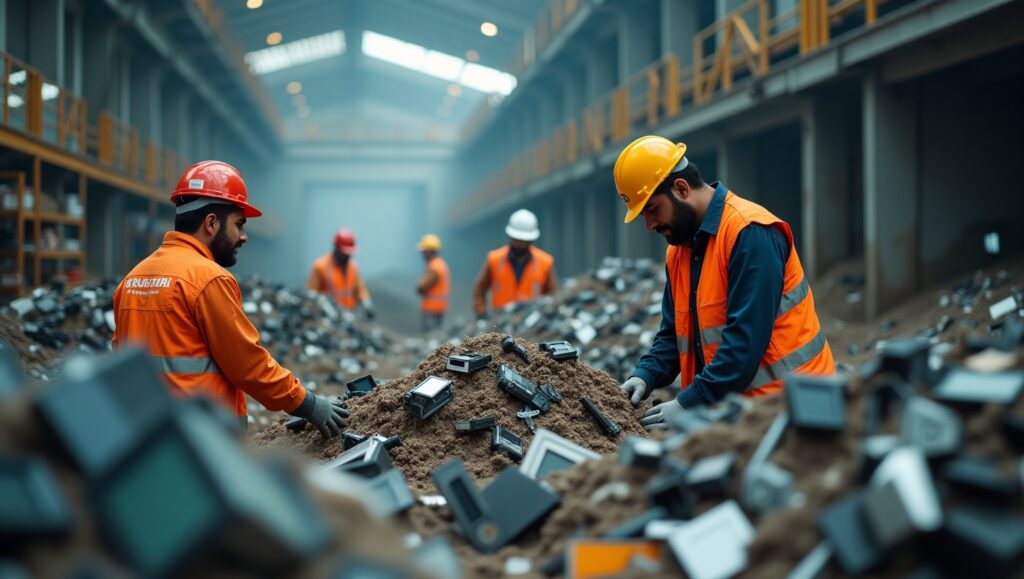
E-Waste Disposal in Sharjah: Why Al Zuhour Scrap is Your Go-To Recycler
Al Zuhour Al Hamra is a buyer and recycler of e-scrap and electronic waste in the UAE. Our commitment to sustainability and secure data destruction sets us apart in the burgeoning field of e-waste management. As technology continues to evolve, the demand for responsible e-scrap disposal in places like Sharjah and across the UAE grows exponentially. One of the significant elements of this process involves the recycling of rare earth metals from electronic devices.
Table of Contents
ToggleWhat are Rare Earth Metals?
Rare earth metals, also known as rare earth elements (REEs), comprise 17 chemical elements crucial for modern electronics’ advancement. Their unique magnetic, luminescent, and electrochemical properties make them indispensable in developing cutting-edge technology, ranging from smartphones to wind turbines.
Sources of Rare Earth Metals
Where Do They Come From?
Although these metals are abundant in the Earth’s crust, their dispersed nature makes extraction a complex task. China stands as the primary global producer, accounting for approximately 85% of all production. Other notable contributors include the United States, Australia, and several African nations. However, the environmental impact of mining these elements is profound, contributing to habitat destruction and pollution.
Common Rare Earth Metals and Their Uses
Examples
Here’s a peek into some of the most prominent rare earth metals:
– Neodymium: Utilized in the creation of powerful magnets for wind turbines and electric vehicles.
– Lanthanum: Integral for camera lenses and batteries.
– Europium: Key to phosphorescent coatings in LED screens and lighting.
These elements also contribute to other applications, such as energy-efficient lighting and sustainable electronics production.
Importance of Recycling Rare Earth Metals
Why Recycle These Rare Earth Metals?
The extraction process of rare earth metals is energy-intensive and environmentally damaging. Recycling them minimizes environmental impact and conserves these non-renewable resources for future generations. Moreover, recycling serves as a stabilizing factor in the global supply chain, reducing dependence on foreign sources and mitigating potential disruptions and price fluctuations. In the UAE, companies that focus on IT asset disposal, like replacing old computer systems with newer ones in data centers, play a significant role in this recycling effort.
Products Utilizing Rare Earth Metals
What Products Use These Metals?
Rare earth metals are embedded in a variety of products:
– Computers: Essential components like hard drives and processors rely on these metals for functionality and efficiency.
– TVs: Europium and other elements enhance vibrant screen colors.
– Cars: Both electric and hybrid vehicles use them in motors and batteries.
– Smartphones: Essential for speakers, microphones, and ensuring durability.
Environmental Impact of Rare Earth Mining
Mining has detrimental environmental consequences, including deforestation and water contamination. Recycling is a sustainable alternative that significantly reduces the corresponding carbon footprint. For UAE businesses, responsible e-scrap management and utilizing local services for recycling old office electronics can contribute significantly to environmental preservation.
Economic Benefits of Recycling Rare Metals
Recycling rare earth metals is more economically advantageous than mining. As prices increase due to resource scarcity, recycling becomes a cost-effective and sustainable solution. From recovering valuable components from outdated telecommunications hardware in Dubai to old tech replacements in Sharjah, the economic and environmental benefits are clear.
Future of Rare Earth Metal Recycling
Technological advancements in recycling processes are promising. Innovative methods like bioleaching, using bacteria to extract metals, and advanced techniques like ionic liquids and supercritical fluids are at the forefront. These ensure more efficient recovery and better sustainability results. The rise of local recycling companies in the UAE enhances these efforts, ensuring responsible recycling throughout regions like Abu Dhabi and Sharjah.
Responsible Recycling with Al Zuhour Scrap
How to Recycle with Al Zuhour Scrap
At Al Zuhour Scrap, we provide easy ways to recycle:
– Schedule pickups for large quantities or corporate e-scrap collections.
– Drop-off locations are available for smaller amounts.
– We ensure data security by thoroughly wiping or destroying devices.
– Our recycling process responsibly reintroduces materials back into the supply chain, thus supporting a circular economy in the UAE.
Conclusion
Incorporating rare earth metal recycling into your organization not only supports environmental sustainability but also provides economic benefits. As a leading entity in UAE e-scrap recycling, Al Zuhour Scrap remains an advocate for innovation in recycling practices, ensuring compliance with international standards for sustainability and data security.
👉 Contact Us for secure e-scrap collection, data destruction certificates, and corporate recycling solutions across the UAE.
