
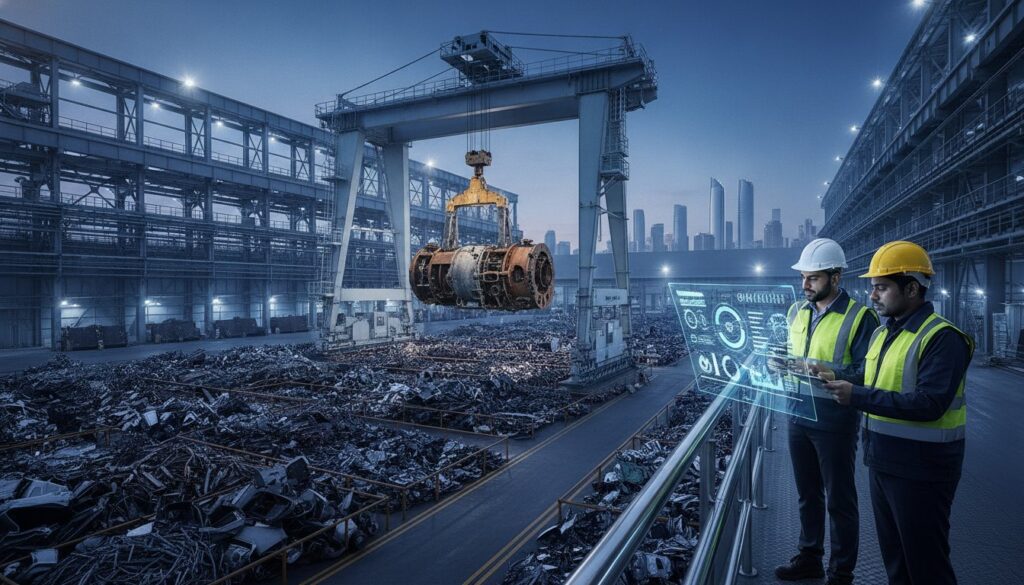
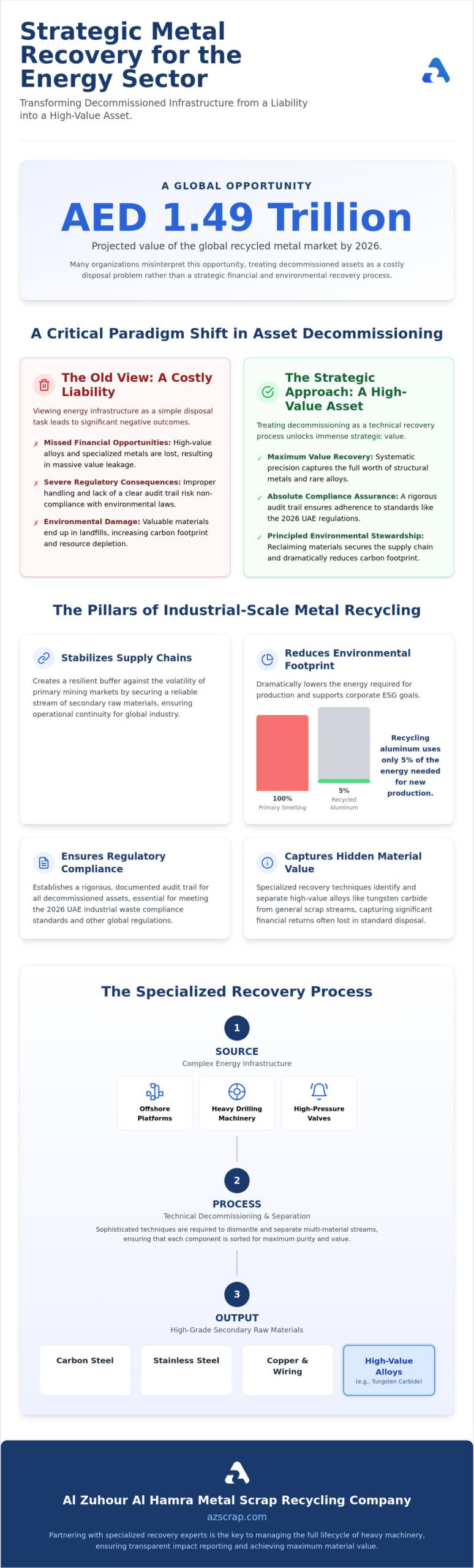
The global recycled metal market is projected to reach 1.49 trillion د.إ in 2026, yet many organizations still treat decommissioned infrastructure as a costly environmental liability. You’re likely facing the immense complexity of dismantling heavy oil and gas machinery while trying to prevent the loss of value in specialized alloys. It’s a high-stakes environment where metal recycling for energy sector operations is often misunderstood as a simple disposal task rather than a strategic recovery process. Improper handling leads to severe regulatory consequences and missed financial opportunities. Maximum recovery. Absolute compliance. Principled stewardship.
Discover how industrial-scale metal recycling secures the energy sector’s supply chain through rigorous technical recovery and ethical decommissioning. We’ll outline the path to achieving maximum material value recovery and maintaining transparent reporting on your environmental impact. By focusing on systematic precision, we’ll explore how Al Zuhour Al Hamra Metal Scrap Recycling Company helps partners meet the 2026 UAE industrial waste compliance requirements. This guide provides the operational clarity needed to transform manufacturing waste and obsolete machinery into strategic, high-value assets for the global supply chain.
Key Takeaways
- Learn how metal recycling for energy sector operations stabilizes supply chains by converting obsolete infrastructure into strategic industrial assets.
- Understand the technical requirements for decommissioning complex oil and gas equipment to ensure maximum recovery of structural and specialized metals.
- Identify high-value alloys within scrap streams, such as tungsten carbide, to capture significant material value often lost in standard disposal.
- Establish a rigorous audit trail for decommissioned assets to ensure full compliance with 2026 UAE industrial waste regulations.
- Evaluate the benefits of partnering with specialized recovery experts who manage the full lifecycle of heavy machinery while providing transparent impact reporting.
The Critical Role of Metal Recycling in Energy Infrastructure
The energy sector serves as the foundation of industrial progress. It requires immense volumes of steel, copper, and specialized alloys to maintain global power. However, the lifecycle of these assets eventually reaches a terminal phase. Professional metal recycling for energy sector operations isn’t merely a waste management solution; it is a critical component of infrastructure resilience. By reclaiming materials from decommissioned refineries and power plants, companies secure a reliable stream of secondary raw materials. This process ensures that the building blocks of energy production remain within the supply chain rather than being discarded as idle waste.
The energy industry stands as the largest producer of complex metal scrap globally. Unlike standard commercial waste, energy assets consist of intricate, heavy-duty assemblies. Offshore platforms, heavy drilling machinery, and high-pressure valves represent significant engineering feats. These items contain a mix of carbon steel, stainless steel, and rare alloys like tungsten carbide. The metal recycling industry must employ sophisticated separation techniques to handle these multi-material streams. Without technical rigor, valuable components are lost to landfills. This results in both financial waste and environmental liability for the operator.
There’s an undeniable environmental imperative at play. Recovering metals reduces the carbon footprint of power generation significantly. For instance, recycling aluminum requires only 5% of the energy needed for primary smelting. In the UAE, where industrial efficiency is a national priority, viewing decommissioned assets as a secondary raw material source is an economic necessity. It transforms a liability into a strategic asset. By 2026, the demand for sustainable raw materials will only intensify as global regulations tighten. Systematic recovery is the only path forward for responsible energy producers.
Preserving Strategic Resources
Recycling stabilizes the supply chain for critical industrial materials. It creates a necessary buffer against the volatility of primary mining markets. When geopolitical shifts or logistics disruptions occur, having a localized source of reclaimed metal ensures operational continuity. Industrial material recovery is the systematic process of reclaiming high-value metals from decommissioned assets to maintain the integrity and availability of the global resource pool.
The Circular Economy in Energy
The industry is moving away from the linear extract-use-discard model. Closed-loop systems are the new standard. High-capacity recycling is essential for achieving corporate ESG goals and meeting the 2026 UAE industrial waste compliance standards. Forward-thinking firms now integrate material recovery into the initial project lifecycle planning. They don’t wait for a site to be obsolete to think about decommissioning. They design for recovery. This proactive approach maximizes the value of every ton of metal recovered from manufacturing waste and machinery disposal.
Specialized Recovery for Oil, Gas, and Power Generation Equipment
Energy infrastructure isn’t just scrap; it’s a complex assembly of high-grade materials. Managing the lifecycle of heavy drilling machinery and offshore platforms requires more than basic demolition. It demands a deep technical understanding of the assets. The goal is to recover every gram of value while mitigating environmental risk. This is the core of effective metal recycling for energy sector logistics in a high-stakes industrial market. Organizations must treat these projects with the same level of engineering precision used during the initial construction phase.
Processing mixed-metal energy assets presents unique hurdles. A single extraction unit might contain carbon steel structures, stainless steel piping, and copper wiring, all bonded or integrated. Separating these efficiently is the difference between profit and loss. We must also consider the certified disposal of manufacturing waste produced during component fabrication. Precision is non-negotiable. In the UAE, adhering to the 2026 industrial waste compliance standards requires a documented, transparent process that generic recyclers cannot provide. Every asset must be tracked from the point of decommissioning to the final material recovery stage.
Oilfield Equipment Decommissioning
Systematic dismantling is the first step. Drilling rigs and extraction hardware are dismantled with surgical care. We separate ferrous metals from high-value non-ferrous components at the source. This ensures environmental safety during the disposal of heavy machinery. By following a disciplined protocol, operators avoid the liability of improper disposal while capturing the full value of specialized alloys. This is particularly relevant for offshore equipment recycling where logistics are inherently complex and the cost of error is high.
Resource recovery is fundamentally about energy conservation. Utilizing recycled materials instead of virgin ore significantly boosts energy efficiency in metal recycling. This data-driven approach aligns with the UAE’s 2026 sustainability targets and global decarbonization trends. For companies looking to optimize their footprint, Oil & Gas Equipment Recycling services provide a structured, compliant pathway to value recovery that protects both the balance sheet and the planet.
Industrial Shredding and Volume Management
High-capacity shredders play a vital role in processing large-scale energy scrap. They provide the volume reduction necessary for efficient transport and secondary processing. On-site processing often reduces logistics costs for massive infrastructure projects, while off-site facilities offer greater sorting precision. Material density optimization through shredding ensures that every shipment is cost-effective and legally compliant. This systematic approach reduces the number of required trips, lowering the overall carbon footprint of the decommissioning project and streamlining the path to final recovery.
High-Value Alloys: From Structural Steel to Tungsten Carbide
Energy sector scrap streams are often dominated by structural steel. However, the true financial and strategic value lies in the specialized alloys engineered for extreme environments. These materials include nickel-based superalloys, high-chrome stainless steels, and cobalt-tungsten composites. Recovering these is technically demanding. Purity determines the final market value. Even minor contamination can downgrade a high-value alloy to basic scrap. This is why metal recycling for energy sector operations requires sophisticated laboratory-grade assessment. We must look beyond the bulk weight to identify the rare elements that drive industrial performance.
The market for tungsten carbide and rare earth metals is volatile. These materials are critical for the next generation of energy production. Utilizing advanced metal recovery technologies is necessary to extract these elements from complex assemblies. By maintaining the integrity of these alloys, we reduce the UAE’s reliance on imported primary ores. It’s a matter of national resource security and industrial precision. Every ton of recovered alloy represents a significant reduction in the energy required for primary smelting and mining.
Tungsten Carbide PDC Drill Recovery
Polycrystalline Diamond Compact (PDC) drills represent some of the most resilient engineering in the oilfield. They contain high concentrations of tungsten and cobalt. These metals are both expensive and difficult to mine. Recovering them from worn drill bits requires a specialized process that separates the carbide from the matrix without degrading the metal’s chemical properties. Al Zuhour Al Hamra bridges the gap between supply and recovery by managing the entire lifecycle of these components. This ensures that the energy sector has a steady supply of recycled tungsten for manufacturing new, high-performance tools. It’s a disciplined approach to preserving high-value industrial assets.
Mixed Metal and Rare Alloy Management
Sorting technologies have evolved. We now use X-ray fluorescence (XRF) and laser-induced breakdown spectroscopy (LIBS) to identify nickel, chrome, and molybdenum alloys instantly. Chemical analysis is essential for certified metal recovery. It provides the transparency needed for regulatory compliance and ensures the integrity of specialized materials for future manufacturing. Every batch of recovered alloy must meet international standards to be reintegrated into the supply chain. This meticulous attention to detail prevents value loss. It supports the long-term sustainability of the industrial ecosystem by ensuring that specialized materials are never downgraded or wasted due to poor sorting.
Best Practices for Energy Asset Disposal and Compliance
Operational excellence in the energy industry requires a disciplined approach to end-of-life assets. Establishing a rigorous audit trail is not optional; it is a legal necessity. For organizations involved in metal recycling for energy sector projects, every component must be accounted for from the moment it is decommissioned. This systematic documentation protects the organization from environmental liability and ensures that all material flows are transparent. In the UAE, the 2026 industrial waste standards demand a level of reporting that goes beyond simple weight receipts. It requires a comprehensive record of material transformation and final destination.
The intersection of data security and physical hardware disposal is a critical gap in many industrial strategies. Modern energy plants are controlled by sophisticated sensors and IT infrastructure. These components often contain sensitive operational data. Simply discarding these items poses a significant security risk. Mitigating this liability requires a certified recycling partner who understands that physical destruction is the only guarantee of data integrity. By utilizing industrial-scale shredding, companies can permanently eliminate data-bearing hardware while simultaneously recovering valuable metals. This dual-purpose workflow ensures that security and sustainability goals are met in a single, controlled process.
Certified E-Waste Processing
Managing control systems and IT infrastructure from energy plants requires specialized expertise. We must treat sensors, circuit boards, and server racks as high-risk assets. Secure destruction of data-bearing components is non-negotiable. Our Certified E-Waste Processing services ensure that all industrial electronics are handled in full compliance with UAE regulations. This process recovers precious metals while guaranteeing that no sensitive operational data remains accessible to unauthorized parties.
The Decommissioning Workflow
A structured workflow is the foundation of regulatory excellence. It begins with an initial site assessment and precise material categorization. This step prevents the cross-contamination of material streams and identifies high-value assets early. Safe extraction and transport of heavy machinery scrap follow, utilizing specialized logistics to minimize site disruption. The process concludes with final reporting and environmental impact certification. This documentation provides the proof of compliance required by international auditors and local regulators. It transforms the decommissioning phase into a verifiable success story of industrial stewardship and resource recovery.
Strategic Partnerships in Industrial Material Recovery
The energy sector operates on a scale that renders standard waste management solutions obsolete. Managing the decommissioning of a refinery or an offshore platform isn’t a task for local scrap collectors. It requires a strategic partnership with a specialist who understands the engineering behind the assets. Successful metal recycling for energy sector initiatives depend on this level of technical synergy. A specialized partner doesn’t just haul away debris. They integrate with your procurement and sustainability teams to reclaim value and ensure resource security. This collaboration transforms the end-of-life phase into a strategic advantage. Organizations managing subsea structures and retired platforms can benefit from understanding the full scope of offshore equipment recycling best practices for industrial asset recovery to maximize compliance and material value.
Al Zuhour Al Hamra serves as a critical link in the UAE energy supply chain. We offer more than just disposal. We provide a closed-loop system where specialized components like tungsten carbide PDC drills are recovered and supplied back to the industry. This dual capability ensures the lifecycle of every material is maximized. By future-proofing energy operations through ethical material management, we transform environmental liabilities into strategic industrial assets. We prioritize the preservation of value over simple destruction, ensuring that rare alloys remain within the productive economy.
Principled Guardianship of Assets
Our commitment to transparency is non-negotiable. We maintain ethical recovery standards that align with international benchmarks and local 2026 UAE industrial waste compliance. A partner who understands both recovery and supply offers a unique perspective on value preservation. We design customized solutions for large-scale demolition and infrastructure projects. This ensures every ton of manufacturing waste is processed with systematic precision. We act as guardians of your industrial legacy, ensuring that every asset is handled with the discipline it deserves.
Driving Global Responsibility
We contribute directly to the UAE’s vision for industrial sustainability. Professional waste management has a profound long-term impact on the energy sector’s resilience. It reduces the reliance on virgin materials and lowers the carbon footprint of the entire industry. This isn’t just about compliance; it’s about leading the transition to a circular economy. Our processes are engineered to meet the high-stakes demands of the power and oil sectors while protecting the local environment. It’s a principled approach to a complex global challenge.
Partner with Al Zuhour Al Hamra for professional energy sector recycling to secure your operational footprint and recover maximum value from your decommissioned assets.
Securing the Future of Energy Through Industrial Material Recovery
The transition to a circular industrial economy isn’t a trend; it’s a strategic necessity. Every decommissioned rig or obsolete refinery represents a reservoir of critical materials. Effective metal recycling for energy sector operations ensures these resources remain productive rather than becoming environmental liabilities. By prioritizing systematic recovery, organizations protect themselves from supply chain volatility and secure their operational footprint. You’ve seen how precise sorting and certified disposal transform manufacturing waste into strategic assets. Compliance with 2026 UAE industrial standards requires this level of technical rigor and transparent reporting.
Al Zuhour Al Hamra stands as a principled guardian in this process. We specialize in oil and gas equipment recycling and utilize high-capacity industrial shredding to guarantee secure disposal. As a global supplier of tungsten carbide PDC drills, we bridge the gap between recovery and supply with unmatched expertise. Don’t leave your decommissioning projects to chance. Secure Your Energy Sector Material Recovery Strategy with Al Zuhour Al Hamra. Let’s build a resilient, sustainable future for the global energy supply chain together.
Frequently Asked Questions
What are the most common metals recycled from the energy sector?
Carbon steel and stainless steel constitute the largest volume of recovered materials from energy infrastructure. Copper remains a high-priority asset due to its extensive use in electrical components and power generation systems. Specialized alloys, including nickel, chrome, and molybdenum, are frequently reclaimed from high-pressure valves and piping. These materials are critical for maintaining the integrity of the global industrial supply chain.
How does Al Zuhour Al Hamra ensure the security of industrial e-waste?
We utilize high-capacity industrial shredding to guarantee the physical destruction of all data-bearing components. This process is essential for sensors, control systems, and IT infrastructure decommissioned from energy plants. Our certified e-waste processing provides a verifiable audit trail. This ensures that sensitive operational data is permanently unrecoverable, meeting the highest standards of industrial security and regulatory excellence.
Can tungsten carbide PDC drills be fully recycled?
Yes, tungsten carbide PDC drills are fully recyclable through specialized recovery processes that separate the carbide from the matrix. This systematic approach allows for the reclamation of tungsten and cobalt without degrading their chemical properties. By recycling these high-value components, we reduce the need for primary mining. This preserves the lifecycle of specialized materials used in heavy drilling machinery and extraction hardware.
What regulations govern oil and gas equipment disposal in the UAE?
The 2026 UAE industrial waste compliance standards dictate the legal framework for equipment disposal. These regulations require documented material flows and transparent reporting on environmental impact. Operators must ensure that heavy machinery disposal is handled by certified partners who can provide a rigorous audit trail. Adhering to these federal standards is a non-negotiable requirement for all energy sector infrastructure projects.
Why is industrial shredding preferred for energy sector decommissioning?
Industrial shredding is the most efficient method for volume reduction and material density optimization. It facilitates the precise separation of mixed-metal assets, which is a common challenge in metal recycling for energy sector operations. Shredding also ensures the secure destruction of hardware. This methodical approach streamlines logistics and reduces the carbon footprint of transporting large-scale machinery scrap to secondary processing facilities.
How is the value of heavy machinery scrap determined for large projects?
The value of heavy machinery scrap is determined by the purity of the alloys and the current market weight of the materials. We use advanced sorting technologies, such as XRF analysis, to identify rare elements like nickel and molybdenum within the scrap stream. This technical assessment ensures that high-value materials aren’t downgraded. Meticulous sorting allows partners to capture the maximum financial value from their decommissioned assets.
Does Al Zuhour Al Hamra provide on-site scrap management for infrastructure sites?
We offer customized on-site management solutions for large-scale demolition and infrastructure projects across the UAE. Our team manages the initial site assessment, material categorization, and the safe extraction of heavy machinery. This proactive involvement minimizes site disruption and ensures that material recovery begins at the point of decommissioning. We handle the complex logistics of transport while maintaining full regulatory compliance throughout the workflow.
What is the environmental impact of recycling specialized drilling alloys?
Recycling specialized drilling alloys significantly reduces the energy consumption and greenhouse gas emissions associated with primary ore extraction. For example, reclaiming aluminum requires only 5% of the energy needed for primary production. By recovering tungsten and cobalt from PDC drills, we conserve finite natural resources and lower the overall carbon footprint of the energy industry. Professional recycling is a principled step toward global industrial sustainability.
