
Table of Contents
ToggleElectronic Scrap Recycling in the UAE: A Comprehensive Guide
Electronic scrap recycling plays a critical role in managing the growing volume of discarded electrical and electronic equipment while protecting the environment and ensuring data security. In the UAE, with its rapidly expanding technology infrastructure and consumer electronics market, responsible electronic scrap recycling is more important than ever. Al Zuhour Al Hamra buys and recycles electronic scrap in the UAE, providing businesses and individuals with secure, compliant, and effective solutions for handling their obsolete or damaged devices.
This guide offers a detailed overview of the electronic scrap recycling landscape in the UAE, including key regulations, practical evaluation tips, recycling processes, safe disposal recommendations, and how Al Zuhour Al Hamra can assist in meeting your recycling needs.
—
Understanding Electronic Scrap Recycling: Importance and Concepts
Electronic scrap recycling involves the collection, sorting, refurbishment, dismantling, and material recovery of unwanted electronic devices and components. Unlike general metal scrap, electronic scrap (or e-scrap) is a complex mixture of materials, including metals, plastics, glass, and hazardous substances such as batteries and refrigerants.
The process prioritizes reuse and refurbishment where feasible to extend the life of devices and parts before moving towards recycling and material recovery. This hierarchy not only conserves natural resources but also reduces the environmental harm caused by improper disposal.
Given the valuable metals and components embedded in electronic scrap—from copper wiring to circuit boards and hard drives—effective recycling can significantly contribute to the circular economy. Additionally, securely erasing data on storage devices protects individuals and businesses from information breaches.
—
What Counts as Electronic Scrap in the UAE?
The UAE’s executive regulation (2021) defines electronic scrap as electrical and electronic equipment intended for disposal, including:
– Computers, laptops, servers, and networking equipment
– Mobile phones, tablets, and other small electronics
– Printers, monitors, televisions, and household appliances
– Circuit boards, power supplies, cables, and electronic components
– Repairable or reusable devices and separated parts
Notably, batteries, refrigerant-containing devices (like refrigerators and AC units), and CRT monitors require special handling due to hazardous substances they may contain. Abu Dhabi’s waste classification guidelines explicitly list certain WEEE (Waste Electrical and Electronic Equipment) and highlight the need for dedicated processing facilities to handle such equipment safely and compliantly see Abu Dhabi WEEE Circular.
—
How to Identify, Sort, and Evaluate Electronic Scrap
Proper evaluation of electronic scrap is essential to maximize recovery value and ensure regulatory compliance:
1. Identification
Record key details for each item:
– Manufacturer, model, serial or asset number
– Product category (e.g., laptop, server, monitor)
– Approximate age and condition (working, repairable, or non-working)
– Presence of batteries, storage media, refrigerants, or screens
– Quantity, weight, and any included accessories
For businesses, maintain a detailed itemized inventory rather than generic descriptions like “mixed electronic scrap” to support compliance and valuation.
2. Triage: Reuse Before Recycling
Assess whether a device can be reused, refurbished, or sold for parts:
– Does the device power on and function correctly?
– Is the casing, screen, battery, or power supply intact and usable?
– Can it be economically repaired or refurbished?
– Is the model still supported or in demand in the local market?
– Can internal components (memory, processors, cables) be salvaged?
– Has all sensitive data been securely erased or destroyed?
This step enhances value by preventing functional equipment from being prematurely shredded Abu Dhabi guidelines support refurbishment where possible.
3. Sorting by Category
Separate electronic scrap into distinct groups to facilitate targeted processing and pricing:
– Working / repairable devices
– Devices for parts harvesting
– Circuit boards and processors
– Copper cables and wiring
– Ferrous and non-ferrous metals (steel, aluminium)
– Plastic components
– Screens and glass
– Batteries and power cells (handled separately)
– Refrigerant-containing appliances
– Data-bearing media (hard drives, SSDs)
Abu Dhabi requires segregation during collection, with batteries and PCB or PCT capacitors stored separately for hazardous waste management SOP for WEEE Licensing.
4. Assessing Value
Value depends on various factors:
– Working condition and completeness
– Brand, model, and age
– Market demand for refurbished products
– Quantity and lot consistency
– Weight and material composition (copper, aluminium, steel, precious metals)
– Presence and grade of circuit boards
– Costs of testing, transport, dismantling
– Proof of ownership and secure data destruction
Since there is no standardized UAE price list, quotations vary among licensed electronic scrap buyers see Enviroserve and others.
—
UAE Regulations for Electronic Scrap Recycling
The UAE regulates electronic scrap recycling through federal and emirate-specific laws:
– Federal Law No. 12 of 2018 governs integrated waste management, including e-waste generation, segregation, collection, treatment, and disposal across the UAE and free zones Federal Law text.
– Cabinet Resolution No. 39 of 2021 mandates supplier take-back of electronic waste from consumers free of charge, requiring sales centers to provide recycling bins and report collected quantities to authorities Executive Regulations.
– Dubai Municipality actively promotes safe e-waste disposal at designated Smart Sustainability Oasis centers or via approved recyclers, and since mid-2026, residents can benefit from home collection services via authorized providers Dubai-Enviroserve partnership.
– Abu Dhabi Environment Agency (EAD) requires e-waste producers to contract with licensed collectors and Tadweer-permitted recycling facilities, maintain e-manifests (BOLISATY system), and comply with segregation and transport rules EAD Circular No. 4.
Businesses and individuals must verify the licenses of any buyer or recycler with the relevant authority to ensure compliance and avoid illegal disposal liabilities.
—
The Electronic Scrap Recycling Process: From Collection to Recovery
A professional recycling operation typically involves these key stages:
1. Collection and Documentation
Accurate records of the generator, equipment details, weight, and destination are maintained. Authorized service providers conduct collections using GPS-tracked vehicles, trained personnel, and appropriate containment measure to comply with regulation.
2. Inspection and Sorting
Recyclers separate reusable or repairable units from true scrap while identifying hazardous components such as batteries, fluorescent lamps, refrigerants, and data-bearing devices.
3. Data Sanitization
Secure wiping or physical destruction of hard drives, SSDs, phones, and storage media is mandatory before resale or recycling. Certificates of data destruction offer businesses compliance proof and reduce data-security risks Dubai-Enviroserve secure erasure.
4. Dismantling
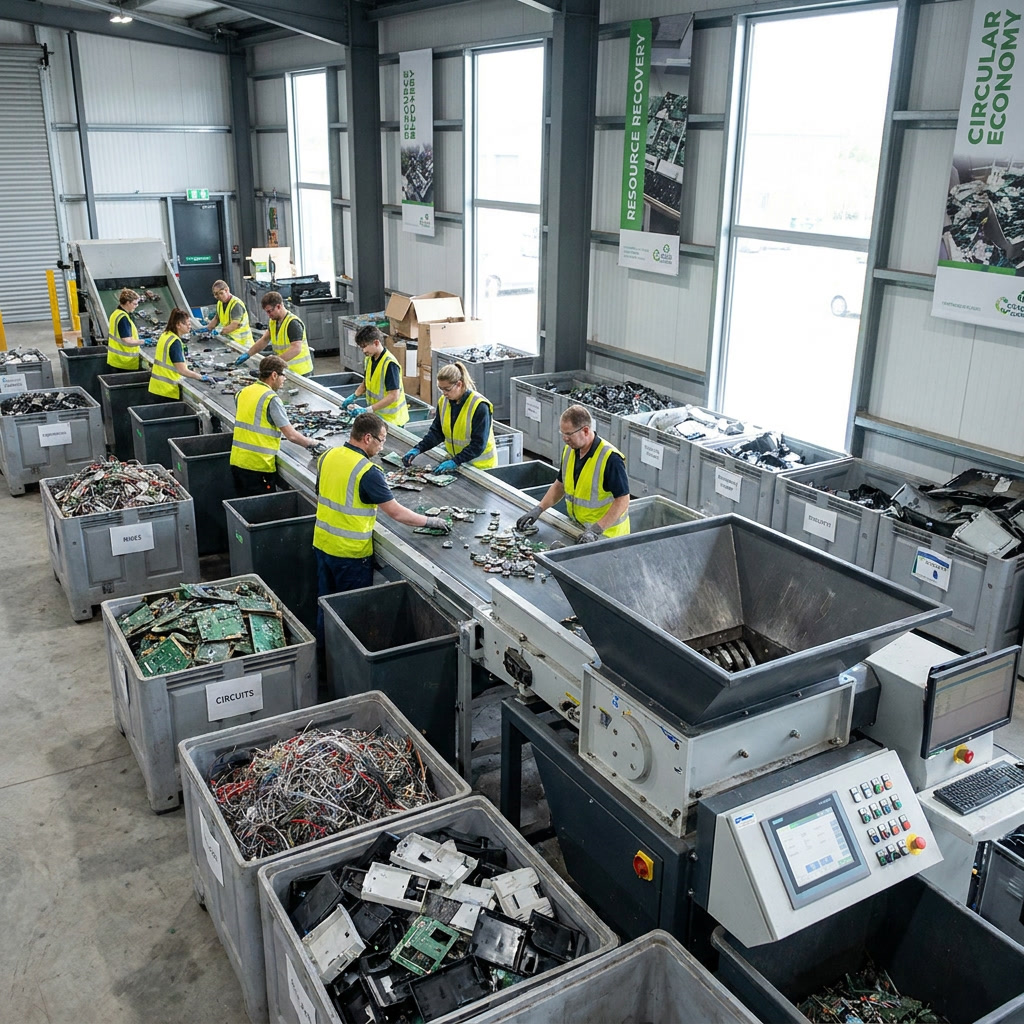
Professional facilities carefully dismantle devices, removing hazardous fractions and categorizing materials—circuit boards, plastics, ferrous and non-ferrous metals, glass, batteries—for downstream processing.
5. Mechanical Processing
Material streams undergo shredding and mechanical separation using techniques like magnets, eddy current separators, air classification, and optical sorting. Enviroserve’s process, for example, sorts and pulverizes e-waste into small fractions to recover precious metals, plastics, and other materials without chemical treatment Enviroserve process.
6. Downstream Recovery and Recycling
Separated fractions are sent to specialized processors for metal recovery or further recycling, employing thermal, hydrometallurgical, or mechanical methods. However, full environmental and economic efficiency depends on market demand and technological limits Academic review.
7. Residual Waste Management
Non-recyclable or hazardous residues are carefully treated according to regulations, avoiding landfill disposal of hazardous substances like batteries or CFCs.
—
Safe and Legal Disposal Tips for Individuals and Businesses
For Individuals
– Separate functional or repairable devices from scrap.
– Back up and securely erase personal data on all devices.
– Avoid dismantling batteries, screens, or refrigerant-containing appliances at home.
– Photograph and list items before engaging with buyers.
– Request the buyer’s trade licence and environmental authorizations.
– Obtain receipts or handover confirmations.
– Deliver batteries and lamps to approved hazardous waste collectors Dubai waste guide.
For Businesses
– Maintain detailed inventories and classify equipment by reuse, parts, recycling, and hazardous components.
– Ensure robust data destruction procedures, ideally documented by certificate.
– Contract only licensed collectors/processors.
– Retain manifests, certificates of recycling, and data-wipe documentation.
– Avoid combining electronic scrap with general commercial waste Abu Dhabi SOP.
—
How Al Zuhour Al Hamra Can Help with Your Electronic Scrap Recycling Needs
Al Zuhour Al Hamra is a trusted electronic scrap buyer in the UAE, working with individuals and businesses to provide compliant, efficient, and environmentally responsible recycling services. Whether you have obsolete computers, networking hardware, phones, or components like circuit boards and copper wiring, Al Zuhour Al Hamra can assist with:
– On-site evaluation and sorting guidance to separate reusable and recyclable materials
– Coordinated collection and transportation using authorized trucks under regulatory standards
– Secure handling, including data-bearing device oversight to safeguard sensitive information
– Transparent documentation: receipts, weight reports, and handover manifests for legal compliance
– Responsible recycling in line with UAE regulations and industry best practices
If you are preparing for an electronic scrap disposal project, consider obtaining a clear inventory and segregating batteries and hazardous materials from general scrap to streamline valuation and processing. For more details on Al Zuhour Al Hamra’s services, visit our e-waste recycling services page or explore our expertise in handling mixed metal scrap recycling.
—
Conclusion
Electronic scrap recycling in the UAE requires careful attention to reuse potential, secure data destruction, regulatory compliance, and safe handling of hazardous components. Understanding the value hierarchy of reuse, parts recovery, and material recycling optimizes both environmental benefits and financial returns.
Individuals and businesses should engage only with licensed and approved collectors and recyclers, verifying credentials and securing proper documentation. The evolving regulatory landscape in Dubai and Abu Dhabi reinforces the importance of trusted partnerships and adherence to best practices.
Al Zuhour Al Hamra offers seamless support for your electronic scrap recycling needs, blending environmental stewardship with compliance and operational transparency. Take the first step today by inventorying your electronic scrap and contacting an experienced recycler for a professional quotation.
Contact Al Zuhour Al Hamra
—
References:
– Dubai Municipality and Enviroserve strategic agreement
– Federal Executive Regulations on electronic waste
– Abu Dhabi WEEE Circular and guidelines
– Enviroserve’s electronic waste process overview
– WHO electronic waste health facts)
