
Table of Contents
ToggleIntroduction: Need for Data Centre Decommissioning in UAE
Data centres form the backbone of modern digital infrastructure but, like all technology, they reach the end of their operational lifecycle. In the UAE, data centre decommissioning is an increasingly critical process as organisations consolidate, relocate, or upgrade their IT infrastructure. This process involves not only dismantling physical hardware but also secure data sanitisation, compliant disposal, and maximising the reuse or recycling value of assets.
Al Zuhour Al Hamra buys and recycles electronic scrap, including servers, storage devices, networking equipment, and other associated data centre hardware in the UAE. Their expertise supports organisations in responsibly managing data centre decommissioning UAE projects, ensuring environmental compliance and data security.
Understanding the Scope of Data Centre Decommissioning: An Overview
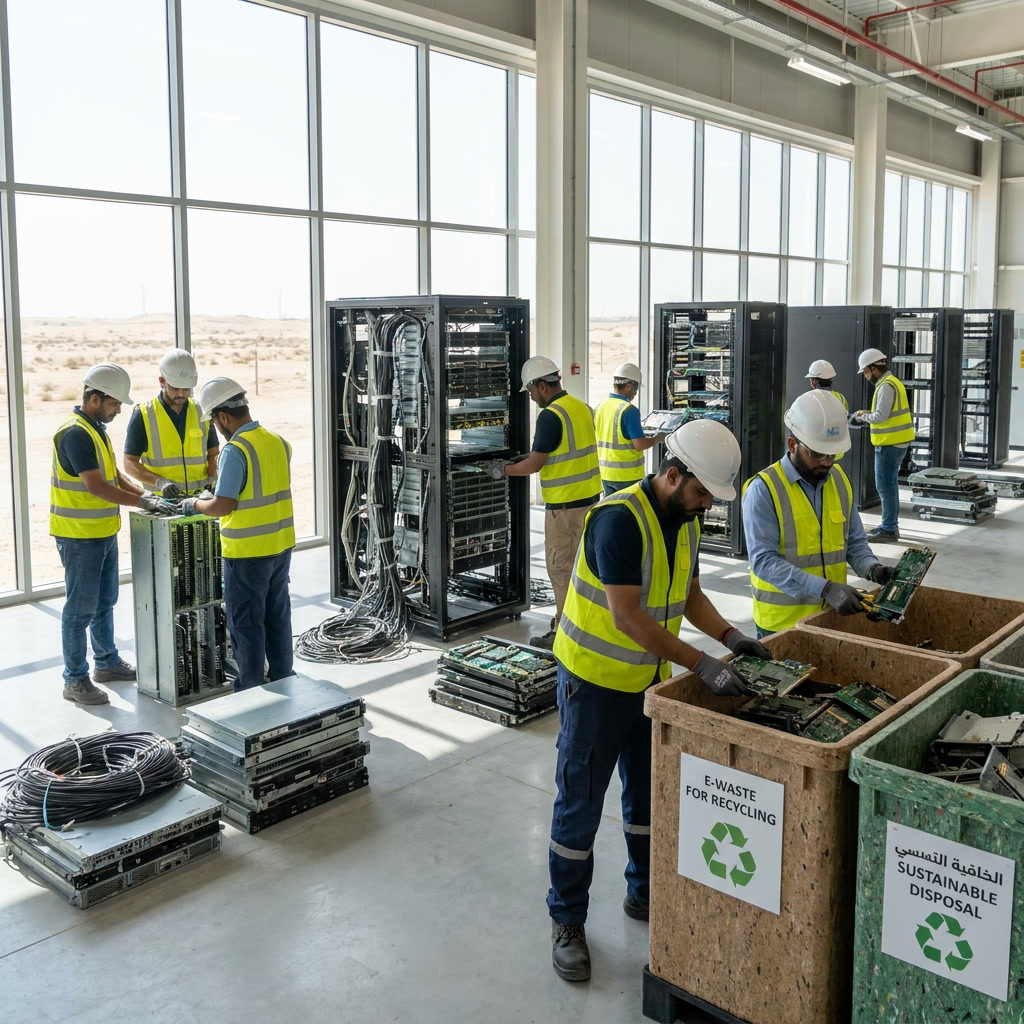
Decommissioning a data centre is far more than simple equipment removal. It requires a comprehensive, multi-phased workflow covering the inventory, secure data destruction, asset disposition, logistics, and final recycling or disposal. The asset spectrum extends from servers, switches, and storage arrays to racks, UPS units, batteries, cooling systems, and cabling. These equipment types each demand special handling due to operational, data sensitivity, or hazardous-material considerations.
Successful projects usually begin with a detailed inventory and dependency review to prevent data loss or business interruptions. The project’s goal may range from full site exit to phased migration, relocation, or consolidation, influencing the scope of removal and reuse.
The Importance of Secure Data Destruction in Data Centre Decommissioning
Data security is paramount when decommissioning data centres. Information-bearing devices like HDDs, SSDs, NVMe drives, storage tapes, and embedded storage must undergo rigorous sanitisation or physical destruction before reuse, resale, or recycling. Organisations in the UAE typically follow internationally recognised standards such as NIST SP 800-88 Rev. 2, which defines data destruction methods as Clear, Purge, and Destroy — each progressively more secure and irreversible.
– Clear: Logical erasure sufficient for low-risk media reuse
– Purge: Physical or logical erasure making data recovery infeasible
– Destroy: Physical destruction rendering the media unusable
It is critical to avoid lesser methods like simple formatting or deletion, which do not meet the security thresholds for sensitive data. Furthermore, degaussing is limited to magnetic media and is not suitable for SSDs or flash devices common in modern data centres.
Sanitisation processes should be thoroughly documented to meet audit requirements and proof of compliance standards NIST SP 800-88 Rev. 2 [web:1].
Deciding the Disposition of Different Types of Decommissioned Assets
The disposition strategy depends on the asset’s condition, data sensitivity, and market value. The hierarchy typically is:
1. Internal reuse or redeployment
2. External resale or vendor buyback
3. Parts harvesting for component reuse
4. Recycling through authorised facilities
5. Secure destruction of non-reusable media
Key asset categories and requirements include:
– Servers, Storage Arrays, Network Devices: Must undergo data sanitisation before resale or reuse.
– CPUs, RAM, GPUs: Tested individually for resale or harvested parts.
– Racks, PDUs, Cabling: Reuse preferred; metal components can be recycled.
– UPS Units, Batteries: Hazardous waste routes required for batteries.
– Cooling Equipment and Generators: Decommissioned under hazardous-material management.
– Packaging and Residual Waste: Segregated and recycled or disposed of per regulations.
Adopting such a disposition approach ensures efficient asset lifecycle management and aligns with UAE environmental and data protection obligations Maxicom service page [web:31].
Legal Compliance: Meeting Federal and Emirate-Level Disposal Requirements in UAE
The legal framework governing data centre decommissioning UAE involves federal laws and emirate-level guidelines:
– Federal Cabinet Resolution No. 39 of 2021 mandates proper waste management, segregation of hazardous waste, financial responsibility of waste producers, and licensed transport and disposal of electronic waste, including data centre equipment Federal Cabinet Resolution No. 39 of 2021 [web:17].
– Dubai Municipality Technical Guideline No. 9 (2021) specifies procedures for recyclable electrical and electronic equipment waste, requiring use of accredited recyclers, obtaining waste disposal permits, and submission of detailed documentation including disposal certificates Dubai Municipality Technical Guideline No. 9 [web:46].
– Environment Agency–Abu Dhabi Circular No. 4 of 2022 requires contracting with Tadweer-permitted service providers for WEEE, use of electronic manifests, and disposal at licensed facilities within Abu Dhabi EAD Circular No. 4 of 2022 [web:29].
– Federal Decree-Law No. 45 of 2021 on Personal Data Protection obliges organisations to implement appropriate data retention, deletion, and secure disposal processes for personal data held in IT assets prior to disposal Official UAE legislation [web:61].
Compliance with these layered regulations demands thorough planning, documentation, and engagement with licensed waste handlers.
Operational Steps involved in Data Centre Decommissioning: From Scoping to Recycle/Reuse
Phase 1: Scoping and Asset Review
Start with defining project parameters (full closure, migration, consolidation), identifying business dependencies, and updating asset registers to include detailed descriptions: manufacturer, model, serial number, location, condition, ownership, and intended disposition. This review ensures critical equipment is not removed prematurely.
Phase 2: Categorisation and Disposition Planning
Assign disposition codes at the component and device level, considering resale potential, reuse options, parts recovery, recycling needs, or secure destruction. Detailed categorisation prevents data or asset loss and maximises resource value.
Phase 3: Data Sanitisation Verification
Selective sanitisation methods based on asset type and data sensitivity must be applied and verified. SSDs and flash memory require special attention due to non-magnetic properties and complex data storage patterns.
Phase 4: Safe Removal and Chain of Custody
Implement rigorous shutdown protocols, cable labelling, isolation measures, security escorts, documented custody transfers, and secure transport. Chain of custody records should cover every handling stage to assure clients and auditors.
Phase 5: Asset Recovery and Recycling
Perform internal redeployment or resale via approved buyers, prioritise parts harvesting for low-value units, and channel non-viable equipment to authorised recyclers like Al Zuhour Al Hamra. Non-compliant disposal risks regulatory penalties and environmental harm.
This stepwise approach minimises operational disruption while ensuring compliance and cost-effectiveness.
Demonstrate Compliance: Importance of Documenting the Decommissioning Process
Documentation is indispensable for verifying compliance with data security and waste regulations. Essential documents include:
– Comprehensive asset registers with serial numbers and disposition codes
– Signed chain-of-custody records for each custody transfer
– Sanitisation or destruction certificates detailing method, personnel, date, and equipment identity
– Recycling or disposal certificates from authorised facilities
– Permits and NOCs for transport and final asset disposition
– Any environmental impact or safety assessments
This evidence supports audits, satisfies client due diligence, and upholds obligations under UAE data protection and waste laws Federal Cabinet Resolution No. 39 of 2021 [web:17].
How Al Zuhour Al Hamra Can Help with Data Centre Decommissioning in UAE
Al Zuhour Al Hamra specialises in the responsible recycling and buying of electronic scrap including servers, storage, network equipment, cables, and metal components from data centres in the UAE. For organisations undertaking data centre decommissioning UAE, Al Zuhour offers professional sorting, collection, and compliant recycling pathways that honour local regulations and environmental standards.
Organisations preparing assets for sale or disposal should:
– Create detailed asset inventories including serial numbers, specifications, and sanitisation requirements.
– Confirm equipment ownership status and prepare sanitised or destroyed drives as per contract terms.
– Verify that all recyclers or buyers hold valid UAE trade licenses and waste management permits.
– Retain all transfer and disposal documentation for compliance.
As one of the trusted partners in the UAE’s electronic waste sector, Al Zuhour Al Hamra provides transparent handling and responsible end-of-life processing. For inquiries, project quotations, or sorting requirements, businesses can Contact Al Zuhour Al Hamra.
Conclusion: Seeking a Legitimate Data Centre Decommissioning Contractor
Data centre decommissioning in the UAE is a complex operation intertwining data security, asset lifecycle management, legal compliance, and environmental responsibility. Organisations must avoid informal or uncertified methods that risk data breaches, regulatory sanctions, or environmental harm.
Partnering with certified contractors who understand the detailed operational steps—from asset categorisation, secure data sanitisation, controlled removal and transport, to verified recycling—is essential. Always verify licenses, waste permits, sanitisation certifications, and downstream recycler credentials before contracting.
By adhering to best practices and UAE-specific regulations, your organisation can mitigate risks, recover asset value, and promote sustainability throughout the data centre decommissioning journey.
For professional, compliant recycling of data centre materials in the UAE, including secure data device handling and environmentally sound disposal, Contact Al Zuhour Al Hamra today.
—
*References:
– NIST SP 800-88 Rev. 2 [web:1]
– Dubai Municipality Technical Guideline No. 9 [web:46]
– Federal Cabinet Resolution No. 39 of 2021 [web:17]
– EAD Circular No. 4 of 2022 [web:29]
– Maxicom service page [web:31]*
—
Learn more about electronic waste recycling and our services for IT asset disposal at Al Zuhour Al Hamra Environmental Services and explore our terms and privacy policies.
