
Table of Contents
ToggleIntroduction to Telecom Equipment Recycling
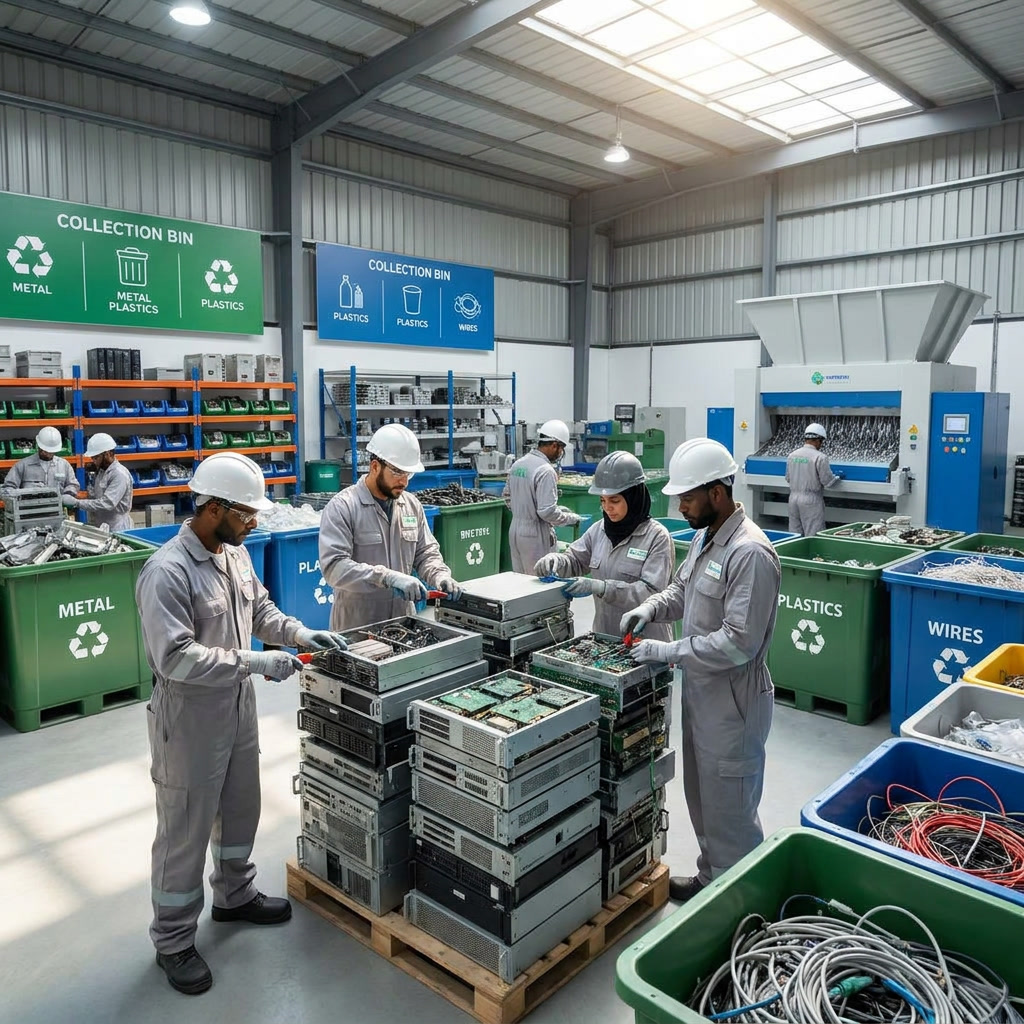
Telecom equipment recycling in UAE is a vital process that extends beyond simple scrap sales. It involves the careful management, reuse, refurbishment, and environmentally compliant disposal of telecommunication hardware such as routers, switches, servers, and other network devices. Al Zuhour Al Hamra buys and recycles telecom equipment scrap materials in the UAE, ensuring that these valuable components are responsibly handled, safeguarding both the environment and data security.
Responsible telecom equipment recycling is essential for businesses, telecom operators, and data centres managing outdated or obsolete technology. Proper handling reduces hazardous waste, supports circular economy goals, and ensures compliance with stringent UAE regulations. This article offers an evidence-based guide to navigating the complexities of telecom equipment recycling in the UAE, helping stakeholders understand legal requirements, sorting methods, and recovery options.
What Counts as Telecom Equipment?
The UAE Telecommunications and Digital Government Regulatory Authority (TDRA) defines telecommunications equipment as hardware designed or adapted for transmitting, receiving, or conveying telecommunication services. This definition broadly covers:
– Network routers and switches
– Enterprise firewalls and carrier-grade security devices
– Optical and fiber-network transmission equipment
– Wireless access points and radio units
– Mobile-network infrastructure hardware
– IP telephones and terminal devices
– Servers, storage arrays, and network appliances used in telecom settings
– Power supplies, racks, modules, and line cards
– Printed circuit boards, copper cables, and metal components derived from telecom hardware
– Decommissioned data centre and telecommunications equipment
Understanding this scope is essential for proper classification and treatment during recycling or resale processes, as the equipment includes a range of highly specialized devices commonly found in telecom infrastructure TDRA equipment regulation.
Distinguishing Product from Waste: A Crucial Step
One of the most important considerations in telecom equipment recycling UAE is correctly determining if equipment is still a usable product, a reusable asset, or waste. According to the Environment Agency – Abu Dhabi’s waste-classification guidance, equipment that remains functional and marketable is generally not classified as waste. For example:
– Working and supported telecom devices suitable for reuse or resale remain products.
– Obsolete but operational equipment may be refurbished or harvested for parts.
– Damaged, incomplete, or uneconomical-to-repair items typically classify as waste and require formal recycling.
Equipment containing batteries or hazardous materials demands careful segregation and licensed handling, given their environmental risk EAD Waste Classification Guidelines.
Establishing this distinction early ensures compliance and maximizes the asset value extraction before recycling or disposal.
Legal & Regulatory Considerations in the UAE
The UAE regulatory landscape enforces strict standards and procedures to manage telecom waste effectively:
Federal Integrated-Waste Rules
Federal Cabinet Resolution No. 39 of 2021 defines electronic waste (e-waste) to include discarded electrical and electronic components, implicitly encompassing telecom hardware when disposed of. Suppliers must accept returns, cover disposal costs, and coordinate with authorised entities Federal Integrated Waste Management.
Abu Dhabi WEEE Licensing and SOP
Environment Agency–Abu Dhabi (EAD) mandates that WEEE (Waste Electrical and Electronic Equipment) producers contract with licensed collectors and processors certified by Tadweer. The Standard Operating Procedure stipulates detailed procedures for:
– On-site handling, storage, and transport
– Use of licensed vehicles equipped with tracking
– Separate storage for batteries and hazardous components
– Chain of custody with electronic manifests (BOLISATY)
– Documentation and certificates throughout the recycling chain EAD WEEE Circular, EAD SOP.
Dubai Municipality Controls
Dubai treats WEEE, including telecom equipment, as hazardous waste, requiring transport by approved carriers to designated facilities. Its Technical Guidelines No. 7 provides specifics on recycling processes, hazardous component handling, and permitting Dubai WEEE Technical Guidelines, Hazardous Waste Disposal.
TDRA Type Approval and Resale Implications
Resale and import of telecom equipment in the UAE are subject to TDRA regulations requiring type approval. Equipment imported commercially or resold within the UAE must comply with TDRA certification, while personal-use exemptions have limited scope. Buyers and sellers must verify approval status to avoid regulatory penalties TDRA Type Approval.
Sorting and Identifying Telecom Equipment
Effective telecom equipment recycling begins with accurate identification and sorting. Detailed recordkeeping protects asset value and ensures proper treatment.
Key Identification Data
For each telecommunication unit, document:
– Manufacturer, exact model, serial number, and asset tag
– Equipment type and category
– Physical condition and power status
– Firmware/software version
– Included modules, accessories, and batteries
– Whether data storage exists and data-sanitisation status
– Estimated weight and ownership
– Intended destination (reuse, parts, recycling)
Sorting Categories
| Category | Examples | Appropriate Action |
|——————————|————————————————|—————————————————-|
| Reusable complete equipment | Working routers, switches, IP phones | Testing, sanitising data, certifying, resale |
| Repairable equipment | Devices with minor faults | Technician inspection and cost-benefit repair |
| Reusable parts and modules | Line cards, power supplies, transceivers | Parts harvesting, testing, resale |
| Data-bearing equipment | Servers, storage with hard drives/SSDs | Secure erasure or physical destruction |
| Battery-containing devices | UPS units, backup systems, wireless phones | Remove batteries and send to licensed channels |
| Material-recovery fractions | PCBs, copper cables, aluminium and steel frames | Manual dismantling and recycling via licensed firms |
| Unknown/hazardous components | Mercury capacitors, unidentified batteries | Isolate and treat as hazardous waste |
Meeting Abu Dhabi’s SOP storage and transport standards includes weather-protected areas, labelled containers, and PPE for handlers EAD SOP.
Challenges and Opportunities in Telecom Equipment Recycling
Challenges
– Legal and licensing complexity: Varying emirate regulations demand careful compliance, especially in Abu Dhabi and Dubai.
– Hazardous components: Batteries, flame retardants, and heavy metals require specialised handling and disposal.
– Data security: Ensuring secure IT asset disposition demands reliable sanitisation or destruction processes.
– Pricing volatility: Value depends heavily on functional condition, market demand, and component recoverability, making fixed-price offers unreliable.
– Verification needs: Claiming equipment functionality or resale eligibility requires technician testing and regulatory checks.
Opportunities
– Asset recovery focus: Hierarchically favour reuse, refurbishment, parts harvesting, and material recycling over disposal, recovering maximum value.
– Environmental benefits: Reducing hazardous landfill contributions and reclaiming metals lowers ecological impact.
– Circular economy support: Resale and refurbishment extend equipment life cycles, supporting sustainable telecommunications infrastructure.
– Technology advances: Sophisticated recycling processes improve precious metal recovery from circuit boards, even in small quantities ITU guidance on equipment reuse.
Services Offered by Al Zuhour Al Hamra Metal Scrap Tr. LLC
Al Zuhour Al Hamra provides professional telecom equipment recycling services tailored to the UAE market. The company specialises in:
– Buying and recycling telecom equipment scrap, including metals, cables, and circuit boards.
– Collecting decommissioned telecom hardware with proper handling of batteries and hazardous components.
– Supporting asset owners with documentation, weight receipts, and compliance assurance aligned with UAE federal and emirate-specific regulations.
– Offering consulting on sorting and preparation to maximize recovery value and ensure regulatory compliance.
For businesses looking to dispose of telecom assets securely and responsibly, Al Zuhour Al Hamra assists with collection logistics, segregation of reusable and waste streams, and routing to licensed downstream recyclers, helping clients meet legal and environmental obligations while optimising value recovery Learn more about Al Zuhour Scrap services.
Conclusion: Optimizing Telecom Equipment Recycling
Telecom equipment recycling in UAE is a careful balance between recovering value, ensuring data security, and fulfilling legal obligations. Rather than viewing old telecom gear as mere scrap, owners should prioritise reuse, refurbishment, and parts recovery before moving to recycling or disposal. Understanding UAE’s complex regulatory environment—from federal waste management laws to Abu Dhabi’s WEEE licensing and Dubai’s hazardous waste controls—is essential.
Al Zuhour Al Hamra Metal Scrap Tr. LLC offers a reliable local solution for the collection and recycling of telecom equipment scrap materials. Their expertise helps safeguard asset value, mitigate environmental risks, and comply with regulations, making telecom equipment recycling UAE a responsible and economically sensible choice.
To learn how to prepare your telecom equipment for responsible recycling or resale, or to arrange collection with a licensed partner, Contact Al Zuhour Al Hamra today.
—
References:
– Environment Agency–Abu Dhabi Circular No. 4 of 2022
– TDRA Telecommunications Equipment Type Approval
– Dubai Technical Guidelines No. 7 – WEEE Recycling
– EAD Waste-Classification Guidelines
– ITU Guidelines on Reuse and Recycling of Telecom Equipment
—
Related Resources:
– Explore further on Al Zuhour’s e-waste recycling services.
– Learn about Al Zuhour’s approach to industrial scrap services.
– Understand the importance of certified waste reporting for corporations.
