
Table of Contents
ToggleHow to Maximize Returns from Your Scaffolding Scrap: UAE’s Trusted Buyer’s Guide
Introduction: Understanding the Role of a Scaffolding Scrap Buyer
When managing surplus, damaged, or condemned scaffolding on construction sites, identifying the right scaffolding scrap buyer is essential to maximizing your returns while ensuring compliance with UAE regulations. A professional scaffolding scrap buyer not only offers competitive quotations but also distinguishes between reusable scaffolding equipment and scrap material intended for metal recycling. Al Zuhour Al Hamra buys and recycles scaffolding scrap metal in the UAE, helping businesses achieve both environmental responsibility and economic benefit.
The term scaffolding scrap buyer can refer to entities that buy both reusable components for resale and condemned materials for processing. This guide focuses primarily on the commercial transaction process related to scrap-material sales, guiding sellers through identification, valuation, collection, and compliant disposal steps.
—
Differentiating Reusable Equipment Sale and Scrap-Material Sale
The first step in any scaffolding scrap transaction is understanding whether the materials are serviceable equipment or condemned scrap metal.
– Reusable equipment sale involves components like tubes, frames, couplers, and base jacks that remain within manufacturer and system specifications, allowing them to be inspected, certified, and resold. Only a competent person can certify a component’s suitability for reuse based on detailed inspections and adherence to safety standards.
– Scrap-material sale applies to scaffolding parts that are deformed, excessively corroded, incomplete, or otherwise unable to meet safety requirements. These are sold primarily for their raw material value, often segmented into ferrous steel, galvanized steel, aluminium, and other categories for recycling.
Beware that a registered scaffolding scrap buyer generally does not certify structural safety or resale fitness without the necessary technical expertise. Accurate segregation avoids undervaluing reusable assets or inadvertently selling potentially unsafe components as reusable stock.
—
Identifying Your Scaffolding Scrap: Is it Steel, Aluminium, or Mixed?
Proper identification of scaffolding materials is crucial both for accurate valuation and for compliance with recycling classifications.
– Steel and galvanized steel scaffolding components typically include tubes, ledgers, frames, and couplers. Steel is magnetic, and galvanized steel has a distinctive shiny coating. EN 39 standard specifies nominal dimensions and coating norms for steel tubes, but unmarked tubes require further testing to confirm alloy and coating status EN 39 Standard.
– Aluminium scaffolding is lighter, non-magnetic, and often found in tower assemblies or system parts. However, aluminium components may have steel pins, couplers, or castors attached, requiring careful separation.
– Mixed or composite loads that combine steel, aluminium, timber planks, or plastic netting should be sorted to avoid grade downgrades, contamination deductions, or outright rejection by the buyer.
Magnet screening and visual inspection are simple first steps, but professional alloy verification may be necessary for precise grading, particularly for aluminium components where scrap value depends largely on purity ReMA Specifications.
—
Inspection and Valuation: How Are Scaffolding Scrap Prices Determined?
A reliable scaffolding scrap buyer bases their quotation on a series of inspection and valuation factors rather than generic price lists. Key factors include:
– Material type and grade: Segregated steel, galvanized steel, and aluminium components attract different prices. Non-metal attachments and contamination reduce value.
– Condition and contamination: Corrosion, deformation, missing parts, or concrete contamination affect grade and discounts. Repainting or blasting does not restore structural integrity and may conceal defects Health & Safety Authority.
– Weight and quantity: Accurate net weight verification via calibrated scales is essential. Deductions apply for packaging, dirt, and other non-metal material.
– Preparation and packaging: Proper dismantling and separation minimize contamination and handling difficulties.
– Location and access: Collection costs vary with site accessibility, dismantling requirements, and vehicle access.
– Required documentation: Clear definition of ownership, sale scope, collection conditions, and destination increases transactional transparency.
Photographs and inventories can support provisional quotations but final prices depend on on-site inspection and verified weight measurements ReMA January 2026 Specifications.
—
Collection and Dispatch: UAE Compliance and Expected Documentation
In the UAE, responsible scaffolding scrap collection requires adherence to federal and emirate-level regulations. Key considerations include:
– Waste classification and separation: Surplus scaffolding may or may not be classified as construction-and-demolition waste, depending on usability and circumstances of discard. Federal Law No. 12 of 2018 mandates waste segregation at the source and appropriate transport to licensed facilities Federal Law 12 of 2018.
– Permits and licensing: Scrap metal trading and transport require municipal permits, especially in Dubai where Technical Guidelines No. 3 stipulate licensing of vehicles and operators Dubai Municipality Guidelines.
– Documentation: Sellers should request a formal collection receipt, detailed material description, weight ticket, and named destination for traceability.
– Dismantling responsibility: Competent scaffold personnel must dismantle live or erected scaffolds. Scrap handlers may only collect materials already dismantled or deemed safe for removal.
– Segregation: Steel, aluminium, timber, plastic, and concrete residues must be separated to comply with recycling standards and prevent contamination Abu Dhabi Scaffolding Code.
—
Quarantine and Professional Assessments: Ensuring Safe Disposal
A critical safety and compliance step before sale is quarantine and assessment of scaffold components suspected of defects, chemical exposure, or unknown coatings.
– Visually inspect for cracks, broken welds, serious corrosion, dents, out-of-round tubes, and missing connections. Such defects render items unsafe for reuse and designate them for scrap recycling SSFI Visual Inspection Procedures.
– Chemically stained or residue-coated components require professional evaluation before transport, as hazardous classification is site and case-specific.
– Isolate questionable components from reusable stock to maintain safety and legal compliance, particularly in Abu Dhabi which mandates segregation of unfit parts Adphc Scaffolding Code.
Maintaining clear quarantine protocols prevents liability risks and ensures the scaffolding scrap buyer can offer a valid, transparent quotation.
—
Scaffolding Scrap Buyer Checklist: What We Need to Know Before Quoting
For an accurate and fair quotation, the scaffolding scrap buyer or recycler requires detailed information:
– Ownership and sale authorization: Confirm entity authorized to sell the scaffold.
– Intent: Define whether materials are offered as reusable equipment or condemned scrap.
– Inventory: Component list detailing tubes, frames, couplers, jacks, decks, quantity, and dimensions.
– Material type: Identification of steel, galvanized steel, aluminium, including any non-metal attachments.
– Condition: Current state including wear, corrosion, damage, and contamination.
– Preparation: Loading responsibility and dismantling status.
– Access: Site location accessibility and infrastructure for collection.
– Weight measurement: Agree on weighing method and controlling scale for settlement.
– Destination: Where the material will be sent, providing evidence of licensed recycling or use.
– Payment terms: Transparent declaration of payment after deduction, collection fees, and accepted contamination levels ReMA Specifications.
This checklist underpins a thorough, compliant, and efficient transaction process.
—
How Al Zuhour Al Hamra Can Help with Your Scaffolding Scrap
Al Zuhour Al Hamra Metal Scrap Tr. LLC is a trusted scaffolding scrap buyer and recycler in the UAE, specializing in the purchase and responsible disposal of steel and aluminium scaffolding scrap.
Next Steps for Sellers:
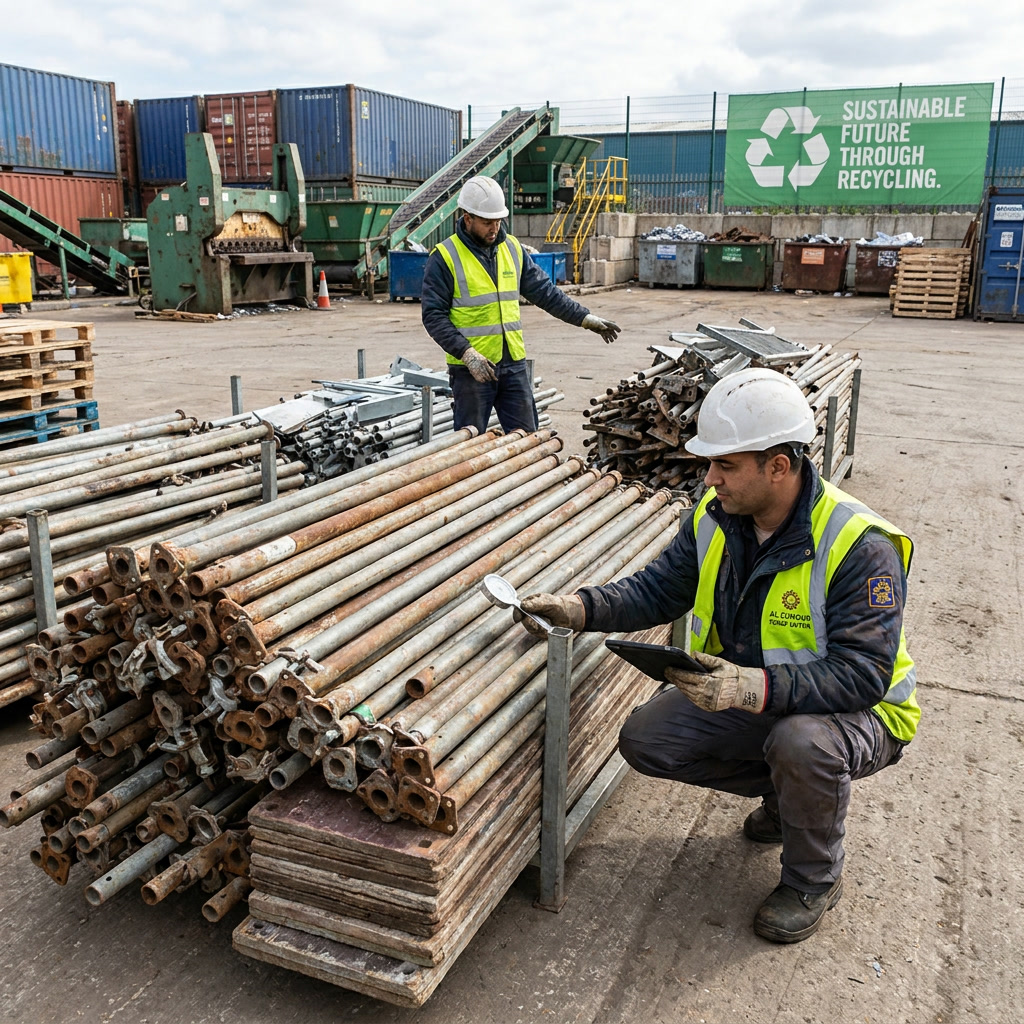
– Prepare your inventory: Separate scaffolding components by material type, condition, and remove non-metal contaminants such as timber or plastic netting.
– Document your stock: Use photos and counts to describe quantities, dimensions, and condition.
– Arrange a site assessment: Allow Al Zuhour’s experts to inspect the scrap for accurate valuation and compliance checks.
– Plan dismantling and collection: Engage competent scaffold personnel for dismantling; Al Zuhour coordinates collection with appropriate licensed vehicles and documentation.
– Obtain a detailed quotation: Receive a clear, inspection-dependent price offer specifying weight basis, deductions, collection charges, and payment terms.
By working with Al Zuhour Al Hamra, sellers ensure compliance with regulatory requirements, maximize their material value, and contribute to the sustainable recycling of UAE construction waste Al Zuhour Services.
—
Conclusion: Making Sustainability Profitable with Scaffolding Scrap Recycling
Maximizing returns from your scaffolding scrap in the UAE requires a clear understanding of material identification, condition assessment, regulatory compliance, and selection of a reputable scaffolding scrap buyer. Differentiating reusable equipment from scrap metal, maintaining segregation, following local laws, and documenting transactions transparently reduce risks while unlocking value.
Al Zuhour Al Hamra offers professional, licensed, and reliable scaffolding scrap collection and recycling services tailored to the UAE market. Contact us to receive a comprehensive quotation based on your specific scaffolding scrap inventory and condition.
Contact Al Zuhour Al Hamra
—
For further insights on responsible waste management and Al Zuhour’s full range of recycling services, explore our pages on industrial scrap services and demolition scrap management.
