
Table of Contents
ToggleIntroduction: What Is an Aircraft Scrap Buyer?
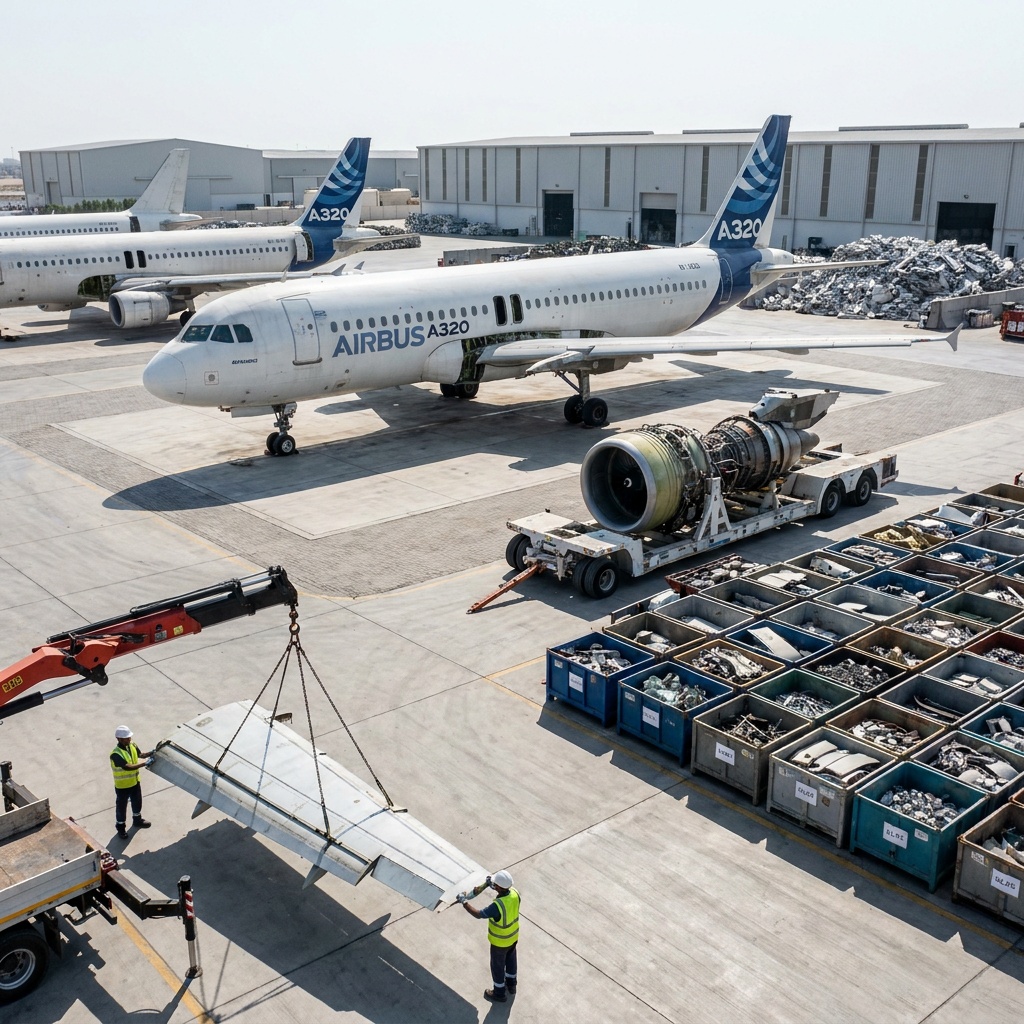
Selling aircraft scrap in the UAE involves specialized processes beyond standard metal recycling because aircraft comprise complex materials and components with distinct legal, safety, and operational considerations. An aircraft scrap buyer is a company or entity equipped not only to purchase retired or end-of-life aircraft and their components but also to handle their dismantling, decontamination, and responsible recycling in compliance with UAE regulations.
Al Zuhour Al Hamra buys and recycles aircraft metal scrap in the UAE. Sellers seeking an aircraft scrap buyer must ensure the buyer’s ability to manage all aspects – from ownership verification and airport handling to component segregation and environmental compliance. This ensures effective value recovery and regulatory adherence.
Commercial Models of Aircraft Scrap Buying
Understanding the commercial models of aircraft scrap buying is key to selecting the right buyer. They include:
– Whole-Asset Purchase and Part-Out: The buyer acquires the entire aircraft, extracting reusable parts (engines, avionics, landing gear) for resale or refurbishment before recycling residual materials. This model requires detailed knowledge of aviation standards and traceability.
– Scrap-Only Purchase: The seller or a third party removes valuable aviation components, leaving the buyer with a stripped airframe or fuselage to process as metal scrap.
– Dismantling Service with Material Credit: The buyer acts as a contractor dismantling the aircraft and charges for the service but offsets costs by crediting recovered materials’ value.
– Site-Clearance Purchase: The buyer takes on the responsibility of cutting, lifting, transporting, and removing the aircraft scrap from an airport or storage location entirely.
– Non-Aviation Reuse: Some aircraft sections may be repurposed for training, display, or artistic use, requiring specific identification and control processes to ensure non-flight deployment.
Each model varies significantly in terms of ownership transfer, liability, and operational scope. Before proceeding, sellers should ask buyers for written offers that clearly define their commercial model, scope of services, and point of title transfer.
How to Determine Aircraft Scrap Buyer Suitability
Choosing an aircraft scrap buyer involves careful due diligence:
– Scope of Purchase: Does the buyer handle complete aircraft, airframes without engines, or only segregated scrap metals?
– Licensing and Approvals: The buyer must hold valid trade licenses authorizing aircraft dismantling, including environmental approvals and permissions to operate airside in airports or restricted zones.
– Regulatory Compliance: Ability to assist with or obtain necessary clearances from the UAE General Civil Aviation Authority (GCAA), local civil aviation authorities, and environmental departments is critical.
– Dismantling Expertise: Some buyers dismantle aircraft in-house; others subcontract hazardous cutting, lifting, or waste transport. Verify subcontractor licensing and integration.
– Accreditations: Check for certifications such as AFRA accreditation, which, while voluntary, assures adherence to best practices for aircraft disassembly and recycling.
– Traceability Measures: The buyer’s procedures should include strict component identification and control to prevent aviation parts re-entering the supply chain without proper documentation and inspection.
A thorough due diligence checklist can help avoid common pitfalls related to legality, safety, and financial transparency.
Organizing Your Aircraft and Ownership Information
Before engaging an aircraft scrap buyer, sellers should prepare detailed documentation to streamline evaluation and quotation:
– Aircraft Identification: Manufacturer, exact model, serial numbers (for airframe and engines), year of manufacture, registration marks, and current location.
– Ownership Proof: Legal owner’s details and beneficial ownership, including powers of attorney if applicable.
– Registration Status: Is the aircraft still registered or airworthy? Is GCAA or foreign deregistration completed or pending?
– Component Records: Availability of logbooks, maintenance histories, records of removed engines, avionics, auxiliary power units, or landing gear.
– Current Condition: Physical status (on landing gear or not), towability, damage history, and presence of hazardous materials or fluids.
– Site Access Notes: Airport restrictions, security requirements, necessary permits, and hardstanding availability.
Having these details ready aligns seller and buyer expectations and facilitates compliance with GCAA’s dismantling application process GCAA FAF-DIS-001 application.
Aircraft Scrap – Composition and Value
Aircraft scrap is not a uniform commodity; it consists of various materials with different recycling values and handling requirements. Common key material streams include:
– Aluminium Alloys: The dominant metal in many aircraft, though composition varies widely by model. For example, an Airbus A320 airframe is approximately 72% aluminium and aluminium-lithium alloys, while the A350 features over 50% composite materials.
– Titanium and Nickel-Based Alloys: Used extensively in engines and critical structural parts, demanding careful segregation and specialized recycling.
– Steel and Stainless Steel: Found in landing gear and certain structural elements.
– Copper Wiring and Electronics: Valuable but requiring proper separation and handling.
– Composite Materials: Carbon fibre or glass fibre panels require dedicated processing pathways and may not be readily recyclable in local facilities.
– Cabin Materials and Residuals: Insulation, sealants, plastics, and contaminated waste streams like fuel filters and fluids complicate disposal.
Material identification and segregation significantly affect the aircraft metal scrap rate. Buyers should use advanced analytical methods—such as X-ray fluorescence (XRF) or laser-induced breakdown spectroscopy—to verify alloy types and maximize value recovery. Mixed or contaminated materials typically reduce scrap value due to processing costs and environmental regulations ICAO Environmental Report 2019.
Importance of Aircraft Identification and Pre-Quotation Information
A well-prepared pre-quotation package is indispensable. Details to include:
– Comprehensive Photographs: External views, cockpit, engines, cabin, wings, damaged areas.
– Removed or Missing Parts Inventory: Clarify which components remain and which have been removed or sold.
– Safety and Hazard Data: Information about residual fuels, hydraulic fluids, oxygen systems, batteries, and other potentially hazardous materials.
– Site Information: Accessibility constraints, available lifting support, working hour limitations, and security protocols.
– Legal Documents: Proof of ownership, bill of sale, power of attorney, deregistration certificates, and any flight restrictions.
This documentation supports accurate quotations and complies with UAE regulatory requirements UAE GCAA De-registration Checklist.
Factors That Affect an Aircraft Scrap Quotation
No fixed UAE market scrap price applies universally to aircraft. Several factors influence quotations:
Positive Value Influencers
– Completeness: Whole aircraft with intact engines, landing gear, and certified components command better offers than stripped shells.
– Documentation: Complete, verifiable maintenance and ownership records enhance component recovery value.
– Material Quality: Known alloy types and clean, segregated streams increase scrap rates.
– Location and Access: Projects with straightforward airport access and suitable hardstanding reduce dismantling costs.
– De-registration and Permits: Seller support with regulatory documentation speeds processing and reduces risks.
Negative Value Influencers or Additional Charges
– Missing or Disputed Ownership: Delays or uncertainties increase buyer risk.
– Damage or Contamination: Fire, flood, corrosion, or hazardous residues lower value or incur disposal fees.
– Restricted Working Conditions: Limited hours, tight airport security, or remote locations raise operational costs.
– Complex Materials: Composite-heavy aircraft with no local recycling solutions may require costly export or disposal.
– Hazardous Waste Management: Residual fluids, batteries, halon, and emergency oxygen cylinders necessitate specialist handling.
Potential buyers should provide detailed quotations segregated into:
– Aircraft purchase price
– Reusable component credits
– Scrap material credit
– Decontamination and dismantling costs
– Handling, transport, and waste disposal fees
– Permits, NOCs, and site reinstatement obligations
This transparency prevents hidden deductions and misunderstanding AFRA Best Management Practices.
The Role of the Right Aircraft Scrap Buyer
Selecting the right aircraft scrap buyer in the UAE ensures that the sale process is compliant, safe, and financially fair. The buyer’s responsibilities include:
– Legally acquiring the aircraft with clear ownership and deregistration confirmation.
– Coordinating with GCAA and local authorities to obtain all required permits and NOCs.
– Safely decontaminating hazardous materials and fluids before dismantling.
– Maintaining traceability of reusable aviation components separately from scrap.
– Employing trained personnel and licensed subcontractors for cutting, lifting, hazardous waste transport, and recycling.
– Segregating and analyzing metal alloys to secure the best value at downstream recovery facilities.
– Providing detailed final documentation, including weighbridge tickets, destruction certificates, and waste transfer records.
Avoid engaging buyers who cannot demonstrate their licensing, airport approvals, environmental compliance, or component control procedures. Such buyers may jeopardize legal standing and environmental safety GCAA FAF-DIS-001 application.
How Al Zuhour Al Hamra Can Help
Al Zuhour Al Hamra Metal Scrap Tr. LLC is a trusted buyer and recycler of aircraft metal scrap in the UAE. We understand the complexities of aircraft dismantling and are equipped to handle:
– Collection and safe transport of aircraft scrap materials.
– Sorting and segregation of aluminium, titanium, steel, copper, and other valuable materials.
– Coordination with regulatory authorities to ensure compliance with GCAA, local civil aviation, and environmental requirements.
– Transparent and detailed quotations that reflect the true value of your aircraft scrap with clear cost breakdowns.
– Provision of traceable documentation at project completion for your peace of mind.
If you are considering selling aircraft scrap in the UAE, preparing your asset documentation as outlined above will expedite processing. We recommend reaching out early to discuss your specific aircraft and site conditions. For further insights about our aircraft recycling services and waste management best practices, visit our page on environmental services and compliance and our comprehensive scrap services.
To initiate a consultation or request a quotation, please Contact Al Zuhour Al Hamra.
—
Conclusion: The Role of the Right Aircraft Scrap Buyer
Engaging the right aircraft scrap buyer is vital to maximize financial return while ensuring legal and environmental compliance in the UAE’s regulated aviation recycling environment. Buyers must possess the expertise, licenses, and operational capability to manage complex aircraft assets — from confirming ownership and obtaining GCAA approvals to executing safe dismantling and responsible recycling.
By understanding the commercial models, identifying key suitability criteria, and preparing detailed aircraft information, sellers can confidently navigate the UAE aircraft recycling process and achieve optimal outcomes.
Choosing a knowledgeable, licensed aircraft scrap buyer like Al Zuhour Al Hamra ensures your aircraft scrap transaction is transparent, secure, and environmentally responsible.
—
For more guidance on selling your aircraft scrap or to learn about our services, explore our blog on the importance of certified waste reporting and how metal scrap is managed in industrial settings.
—
References
– ICAO Environmental Report 2019: Best Practices and Standards in Aircraft End-of-Life and Recycling
– UAE GCAA FAF-DIS-001 Application: Dismantle and Destroy
– AFRA Best Management Practices for Aircraft Dismantling and Recycling
– Dubai Municipality Technical Guideline No. 11: Transport and Handling of Hazardous Waste
– UAE Federal Law No. 12 of 2018 on Integrated Waste Management
