
Every year, billions of products are manufactured — from smartphones and furniture to industrial machinery and food packaging. We live in an age of mass production and relentless consumption. Yet strangely, the Earth isn’t visibly buried in trash.
So… where is all the waste going?
The answer lies in a quiet revolution reshaping how the world manages materials: the circular economy.
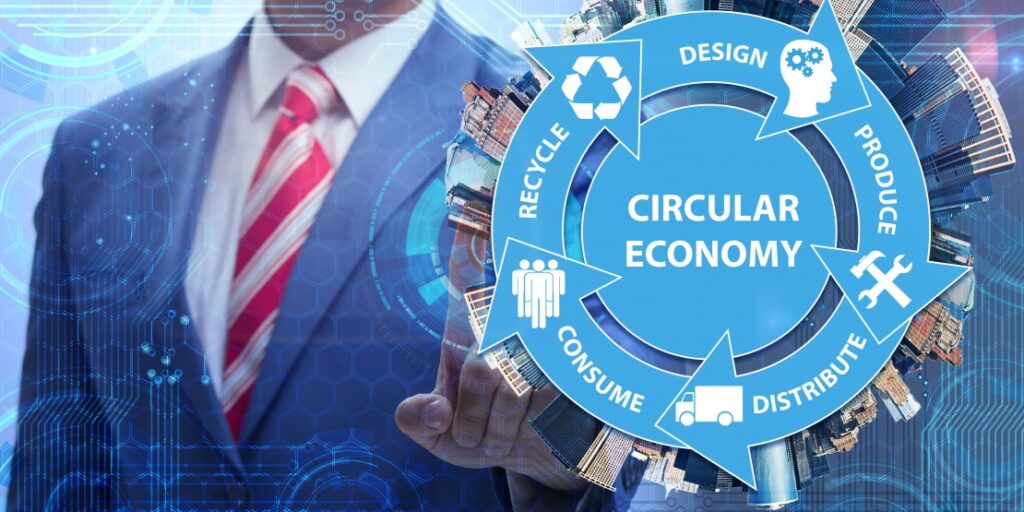
Unlike the traditional “take, make, dispose” model that feeds landfills and pollution, the circular economy views waste as a resource. It ensures that products, materials, and resources stay in circulation — reused, refurbished, or recycled — for as long as possible.
And at the forefront of this transformation in the UAE stands Al Zuhour Al Hamra — redefining how waste is recovered, repurposed, and reintegrated into the economy.
The Circular Economy — A Step-by-Step Breakdown
Let’s walk through the full lifecycle of materials — from extraction to renewal — to understand how the circular economy quietly prevents our world from being overwhelmed by waste.
1. Raw Resources → Parts → Assembly → Distribution
Everything begins with the Earth — iron ore, copper, aluminum, plastics. These materials are refined and crafted into parts: wires, pipes, circuit boards, and casings.
Once assembled into final products — AC units, IT assets, appliances — they’re distributed globally, ending up in homes, offices, factories, and shops across the UAE and beyond.
2. User Phase
Products are used — sometimes for years, sometimes just months. But here’s where the circular model diverges from the old one. When an item reaches end-of-life, it’s not waste. It’s raw material in disguise.
This is where Al Zuhour’s work begins.
3. Recover & Manage
Al Zuhour Al Hamra intercepts the waste stream — collecting, sorting, and professionally processing materials to ensure nothing valuable goes to waste.
They:
- Buy and recycle metal scrap from businesses, factories, and construction sites
- Process e-waste including old laptops, telecom equipment, and electronics
- Handle batteries and hazardous components with certified safety protocols
- Maintain a zero-landfill policy, ensuring recyclables don’t end up in dumps
Their sustainable practices align with global standards and push the UAE closer to net-zero goals.
4. Landfill Gas to Energy (Minimal, Controlled)
While Al Zuhour diverts the majority of waste, some organic or municipal materials may still reach controlled landfills. Even here, waste is converted into energy through landfill gas recovery — a final attempt to extract value.
But the ultimate goal? Keep as much out of landfills as possible.
5. Resource Renewal
After collection, materials are separated:
- Metals (like copper and aluminum) are sorted and cleaned
- Cables are stripped; plastics isolated
- E-waste is dismantled to extract precious metals like gold, palladium, and silver
Al Zuhour’s advanced facility prepares these for reentry into the industrial ecosystem.
6. Refurbishment & Parts Harvesting
Not all equipment is destroyed. Al Zuhour refurbishes reusable items — like hard drives, IT assets, and telecom gear — and harvests working parts from systems like UPS batteries and HVAC units.
These are reconditioned and sold, extending product life and reducing demand for virgin materials.
7. Recycle & Re-manufacture
Finally, materials are returned to manufacturers:
- Steel is melted and reshaped
- Plastics are pelletized for future molding
- Circuit boards are rebuilt using salvaged precious components
The result? A seamless loop that cuts waste, saves energy, and powers a truly sustainable future.
Al Zuhour Al Hamra: A Leader in UAE’s Circular Economy ♻️
Operating across Sharjah, Abu Dhabi, Dubai, Ajman, and beyond, Al Zuhour isn’t just a scrap yard — it’s an engine of environmental change.
- Licensed for e-waste, battery, and metal scrap recycling
- Committed to zero-landfill, carbon-reduction, and GRI-aligned sustainability reporting
- Supporting government bodies, industrial zones, and commercial sectors
- Enabling businesses to meet ESG and net-zero goals
From dismantling old machines to rebuilding future-ready materials — Al Zuhour Scrap ensures nothing is wasted.
Why It Matters
Because what we do with waste determines the future we live in.
Every product we discard — a broken phone, a rusted machine, a dead battery — carries hidden consequences. If left unmanaged, that waste pollutes our soil, poisons our air, and clogs our landfills for centuries.
But waste isn’t just a problem — it’s an opportunity.
The circular economy turns what’s thrown away into something valuable again. It reduces pressure on raw materials, lowers emissions, and protects ecosystems by keeping resources in use for longer.
And in a world facing climate urgency, resource scarcity, and rising consumption, this shift is not optional — it’s essential.
That’s why it matters. Because every cable recycled, every circuit repurposed, every piece of scrap recovered by companies like Al Zuhour Al Hamra Metal Scrap Tr. LLC brings us one step closer to a cleaner, smarter, more sustainable future.
Waste doesn’t have to cost the Earth — if we handle it wisely.
Be Part of the Solution
Whether you’re an industrial site with surplus scrap, a company upgrading IT infrastructure, or a municipality aiming for sustainability — your waste can be your contribution to a cleaner planet.
Partner with Al Zuhour Al Hamra in building a circular economy that works for business and for Earth.
Rethink waste. Rebuild value. Reclaim the future.
