

Introduction
ADC 12 aluminum ingots are vital to the automotive and electronics sectors, prized for their excellent castability and durability. These ingots adhere to Japanese Industrial Standards, featuring a precise chemical composition that offers unmatched mechanical strength and corrosion resistance. This article delves into their chemical composition, industrial applications, global distribution, casting processes, and economic factors shaping the market. Each chapter will not only illuminate the technical specifications and usages of ADC 12 but also connect it to the broader industrial and economic frameworks essential for manufacturers, suppliers, and recyclers.
Chapter 1: Chemical Composition and Technological Insights of ADC 12 Aluminum Ingots
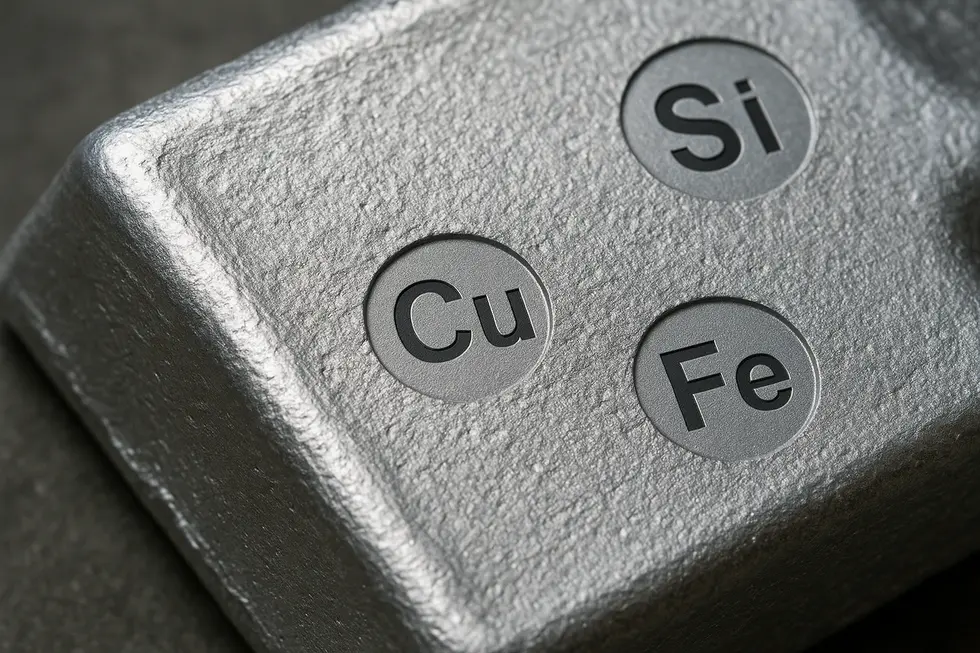
1. Technological Influence of Chemical Composition on ADC 12 Ingots
ADC12 aluminum ingots are pivotal in die-casting due to their precise chemical composition. The high silicon content, up to 11%, enhances fluidity and minimizes shrinkage, resulting in superior mold filling. Copper imbues strength, but excess can compromise corrosion resistance. Rigorous quality control employing optical emission spectrometry ensures JIS compliance, confirming that trace impurities like lead remain within limits. This technological scrutiny strengthens the ingots’ role in automotive and electronics manufacturing.
For more insights, visit the evolution of synthetic ethos.
2. How ADC 12 Aluminum’s Unique Blend Influences Performance and Applications
ADC 12 aluminum ingots possess a distinctive chemical composition that prominently influences their mechanical properties and industrial applications. With aluminum, silicon, and copper as its primary constituents, ADC 12 achieves a blend ideal for high-performance die casting tasks. Silicon enhances fluidity and contributes to wear resistance, while copper augments tensile strength and machinability. This mix is indispensable in manufacturing automotive parts and electronics, supporting the creation of intricate structures and enabling efficient production. For a comparative analysis of ADC 12 and alternative materials, visit Comparison Between ADC12 Aluminum Alloy and Stainless Steel Materials.
3. Decoding the Alloying Elements: The Intricate Make-up of ADC 12 Ingots
ADC 12 aluminum ingots owe their impressive qualities to a precise blend of aluminum, silicon, and copper. Each element plays a critical role, with silicon enhancing fluidity and castability, while copper bolsters strength and corrosion resistance. This intricate balance differentiates ADC 12 from other alloys like A380, prioritizing specific properties for high-pressure die casting. Delve deeper into ADC 12’s unique composition at Sunrise Metal.
4. Unlocking the Economic Potential of ADC 12’s Chemical Composition
ADC 12 aluminum ingots owe their economic potential to a composition that balances cost-efficiency with high performance. Their chemical makeup, featuring a high aluminum content and optimized silicon percentages, reduces melting energy and raw material costs, particularly through recycling. This efficient production supports widespread applications in automotive and electrical sectors, answering global demand and leveraging trade fluctuations. Furthermore, sustainability through recycling aligns with eco-friendly practices, potentially attracting buyers willing to invest in greener solutions. Explore more about recycling innovations.
5. The Political Landscape Shaping ADC 12 Aluminum Standards
Geopolitical forces crucially mold the chemical standards of ADC 12 aluminum ingots. The interplay of global trade, regional dictates, and international regulations impacts material sourcing and ingredient precision. Trade agreements and tariffs affect ingredient access, while regional needs and projects dictate specific element thresholds. Economic conflicts reshape demand, pushing innovations that subtly recalibrate these alloys. Regional industrial regulations also play a pivotal role in setting elemental limits. More details can be found in this Trade India article.
Chapter 2: Industrial Applications of ADC 12 Aluminum Ingots
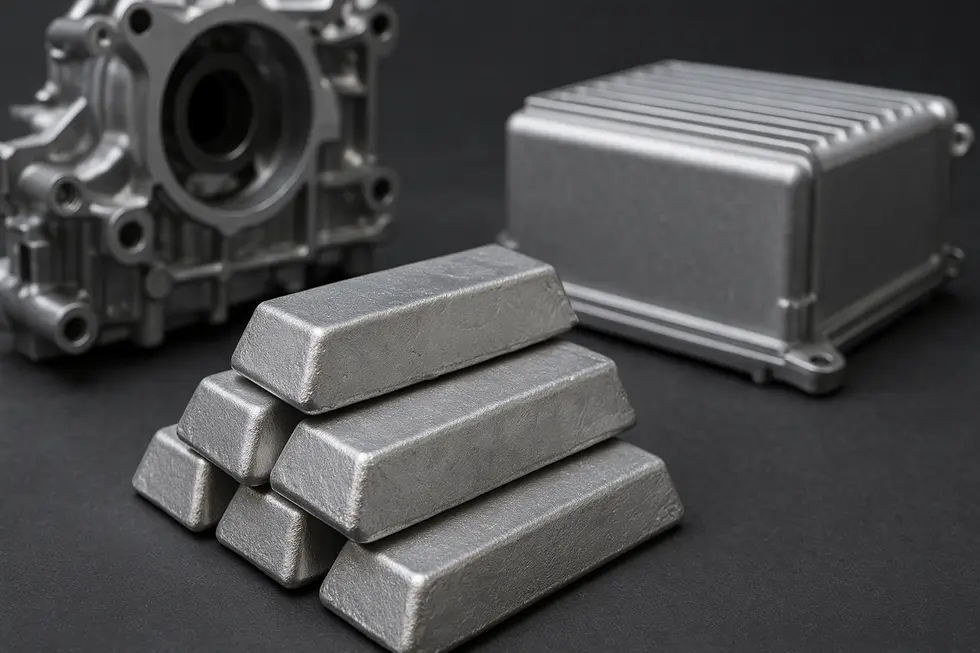
1. Harnessing the Power of Die Casting with ADC 12 Aluminum Ingots
ADC 12 aluminum ingots are an indispensable material in die casting, especially for producing high-strength, lightweight components with superb surface finishes. Their fluidity and corrosion resistance make them ideal for the automotive sector, crafting cylinder head covers, and sensor housings. Similar benefits extend to electronics, where ADC 12’s thermal conductivity is crucial for housing designs. The efficient castability allows for rapid, cost-effective production with minimal defects. For custom die-casting services related to ADC 12, visit Sunon Mould Aluminum Die Casting Parts.
2. Revving Up: The Automotive Industry’s Essential Embrace of ADC 12 Aluminum Ingots
ADC 12 aluminum ingots serve as a cornerstone in automotive manufacturing, thanks to their versatile properties that precisely meet the demands of the industry. Used in crafting engine blocks, wheels, and transmission housings, they excel in delivering resilience without compromising weight. The alloy’s impressive castability and mechanical stability make it an attractive choice for components that encounter significant stress. With an ongoing focus on weight reduction and efficiency, manufacturers lean on ADC 12’s superior blending of strength and formability, harnessing these ingots to shape a more durable future in automotive engineering. Learn more about their applications.
3. Harnessing ADC 12 Aluminum Ingots in Electrical and Electronics Sectors
ADC 12 aluminum ingots play a pivotal role in the electrical and electronics sectors due to their excellent thermal properties and castability. They are crucial in manufacturing components like transformer housings, heat sinks, and electronics enclosures. These uses leverage the alloy’s strength, corrosion resistance, and high thermal conductivity, making them ideal for precise and efficient component production. ADC 12 supports design flexibility needed for modern electronics. Read more about specialized casting.
4. Unveiling the Extrusion Capabilities of ADC 12 Aluminum Ingots
The extrusion potential of ADC 12 aluminum ingots is a testament to their alloy composition and market traction, notably in automotive and industrial sectors. Their excellent casting properties, mechanical strength, and corrosion resistance align perfectly with extrusion demands. Stability in pricing and increasing extrusion operations highlight the alloy’s reliability in manufacturing. Quality recycling processes contribute to maintaining high purity essential for effective extrusion. For more insights, check the ADC12 aluminium OEM-grade alloy ingot prices.
5. Recycling for Sustainable Industrial Impact with ADC 12 Aluminum Ingots
ADC 12 aluminum ingots exemplify sustainability due to their high recyclability, offering substantial environmental benefits. Recycling these ingots drastically reduces energy consumption by up to 95%, compared to primary aluminum production. Innovative facilities, such as Neveah Limited’s in Ogun State, showcase the industry’s shift towards eco-friendly practices, transforming scrap into high-purity ingots. Despite challenges like raw material shortages, the commitment to recycling bolsters the circular economy, minimizing waste and emissions, and maintaining alloy integrity. Learn more about Neveah’s initiatives.
Chapter 3: Global Supply and Distribution of ADC 12 Aluminum Ingots

1. Driving Forces: Regional Production Capacities and Export Dynamics
ADC 12 aluminum ingots are a crucial part of the global supply chain, influenced by varied regional production capacities and dynamic export strategies. In Africa, strategic locations in Tanzania and Mozambique enhance global reach due to proximity to major shipping routes. Countries like India and Malaysia play a significant role in exports. Export dynamics, shaped by market conditions and logistical challenges, maintain a stable price, crucial for sustained demand amid currency fluctuation challenges.
2. Navigating Economic Tides in ADC 12 Import Markets
The major import markets for ADC 12 aluminum ingots, such as India, Vietnam, and the USA, are strongly influenced by various economic dynamics. Raw material availability limits production to around 55-60% capacity in India due to high scrap prices. China’s import decline results from unfavorable cost margins compared to domestic pricing. Furthermore, certification requirements like BIS in India impact supplier viability. Regional price disparities, coupled with critical port infrastructures in countries like the USA, shape global distribution. More details on global market dynamics.
3. Economic Challenges Shaping the ADC 12 Aluminum Ingot Market
In the global distribution of ADC 12 aluminum ingots, pricing differentials significantly impact market viability. Rising costs for essential raw materials like silicon and copper have influenced production expenses. However, high inventory levels and weak demand exert downward pressure on selling prices. Moreover, domestic price stability contrasts with negative import margins and regional price disparities, all contributing to a challenging economic landscape for producers and suppliers alike. Check out Zorba Aluminum Scrap Supply Recycling for more insights into this dynamic market.
4. Anticipating Market Fluctuations: ADC 12 Futures Market and Industry Innovations
Navigating the Futures Market for ADC12 aluminum ingots involves understanding supply-demand intricacies and price dynamics. The contracts on Chinese exchanges, despite spot-futures convergence, reflect resilience with active trading volumes. Price stability persists due to specialized alloy needs and inventory discipline, though rising stockpiles hint at soft demand. Global factors like aluminum scrap supply and trade policy shifts weigh in, suggesting a complex yet cautiously optimistic industry landscape.
5. Dominant Forces Shaping the ADC 12 Aluminum Ingot Landscape
In the intricate web of global supply chains, India, the UAE, and Malaysia serve pivotal roles in the distribution of ADC 12 aluminum ingots. Together, these countries account for a significant portion of exports, with India alone contributing 42% of global supply. The market dynamics are further influenced by South Korea and Thailand, each providing substantial monthly shipments. As the industry evolves, major manufacturers navigate supply chain pressures, ensuring ADC 12’s steady availability. More on market challenges highlights the balancing act needed to meet fluctuating global demands.
Chapter 4: Casting Processes Involving ADC 12 Aluminum Ingots
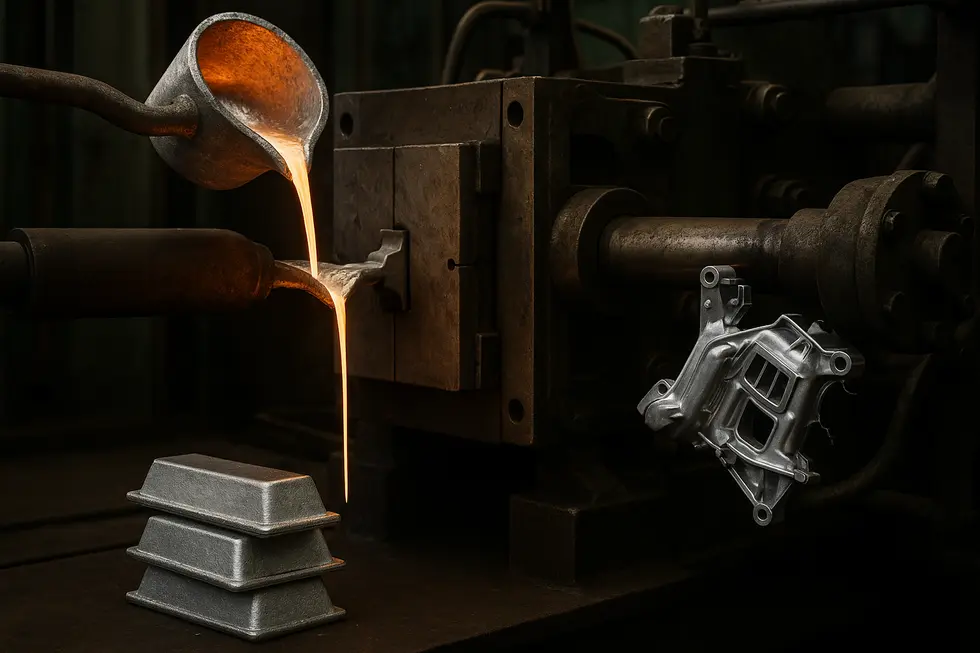
1. Crafting Precision: Preparing ADC12 Ingots for Die-Casting Success
Preparing ADC12 aluminum ingots for casting is an intricate dance of precision and control. Alloy selection and melting occur between 660°C and 700°C, preserving chemical integrity. Composition adjustments optimize the metal’s properties, while degassing and filtration eradicate impurities, enhancing casting quality. Proper mold preparation using hardened steel molds withstands high pressures, ensuring defect-free components. From melting to mold release, meticulous preparation paves the way for manufacturing excellence.
2. Transforming Ingots into Precision Parts: High-Pressure Die Casting Explained
High-Pressure Die Casting (HPDC) harnesses the exceptional properties of ADC12 aluminum ingots to produce high-performance components. Beginning with carefully controlled melting, molten ADC12 is injected into precision steel molds at pressures between 500 to 1500 bar. This rapid injection—a hallmark of HPDC—ensures detail and dimensional accuracy, essential for automotive and electronic applications. After casting, components receive post-casting finishes like anodizing and machining. ADC12’s castability, strength, and corrosion resistance make it indispensable in HPDC, offering cost-effective, robust parts. Discover how innovative recycling advances support sustainable practices.
3. Refining Excellence: Post-Casting Operations for ADC 12 Aluminum Ingots
In the intricate realm of casting processes, post-casting operations serve as the linchpin in transforming ADC12 aluminum ingots into high-quality finished parts. Starting with the meticulous preparation of material through precise melting and alloy composition adjustments, the emphasis remains on quality. Here, high-pressure die casting ensures dimensional fidelity and structural strength, further supported by rigorous quality control measures like x-ray inspections. The surface finishing stages, including trimming, deburring, and passivation treatments, enhance both aesthetic and protective qualities. Advanced procedures such as precision CNC machining finalize parts, ensuring impeccable tolerances. Specialized heat treatment follows, stabilizing the microstructure to enhance overall quality and performance. This comprehensive sequence blends expertise and technology, elevating ADC12 aluminum castings to meet the most demanding industrial specifications.
For additional technical guidance specific to ADC12 alloys, visit Sunon Mould – Aluminum Die Casting Parts.
4. Ensuring Excellence: Quality Control in ADC12 Casting
The casting of ADC12 aluminum ingots demands meticulous quality control to avoid defects like porosity and shrinkage, crucial for high-performance applications. It begins with ensuring optimal material composition via spectrometer analysis and controlled melting temperatures. Rigorous monitoring during high-pressure die casting maintains precise temperature and pressure conditions. Post-casting inspections, including X-ray scans and dimensional checks via CMMs, verify integrity. Additionally, surface treatments receive systematic evaluations to uphold finish quality. This comprehensive approach, integrated within a robust quality management system, guarantees reliable, high-standard components source.
5. Streamlined Excellence: ADC12 Advantages in High-Pressure Die Casting
ADC12 aluminum ingots shine in high-pressure die casting due to their excellent fluidity and castability, which allow for the creation of intricate, defect-free components with high strength and corrosion resistance. These properties ensure cost-effective and precise manufacturing, minimizing post-cast machining. Ideal for mass production, ADC12 stands as a favored choice in automotive and electronics sectors for its rapid solidification and reliable performance. Learn more about innovations in aluminum recycling.
Chapter 5: Economic Factors Influencing the ADC 12 Aluminum Ingots Market

1. Navigating Supply Scarcities and Economic Pressures in the ADC12 Aluminum Market
The ADC12 aluminum ingots market grapples with notable raw material procurement challenges due to shredded aluminum scrap shortages, impacting both domestic and international supply chains. This has led to production cuts and uneven regional supply distribution, with traders hoarding warrants further tightening availability. Despite weak demand, strong cost support persists, driven by low inventory levels and rising production costs, pushing prices to remain firm despite economic volatility.
2. Navigating Demand Slumps and Seasonal Shifts in the ADC12 Market
In mid-2025, the ADC12 aluminum ingots market faces pronounced demand softness, exacerbated by the typical summer slowdown. Imports have dropped, with a 12.1% decline in May 2025 year-on-year. Social inventories are climbing, particularly across major hubs, signaling decreased consumption. Surprisingly, prices remain stable; however, import costs pose challenges, contributing to cautious trading atmospheres. This volatility calls for strategic purchasing decisions amidst global economic uncertainties, as explored in detail here.
3. The Role of Inventory Dynamics in Shaping ADC 12 Aluminum Ingots Market Economics
The high inventory levels of ADC12 aluminum ingots greatly influence market economics. Buildups in regions like Foshan and Ningbo highlight this trend, with over 328,000 metric tons accumulated. These levels dampen demand as die-casting operations slow due to seasonal factors, preventing price hikes. Prices remain stable yet constrained within RMB 19,800-20,100 per tonne. Even with raw material scarcity adding cost pressure, market sentiment is cautiously restrained. For further insights, see the AlCircle Press Release.
4. Navigating Trade Uncertainties and Macroeconomic Challenges in the ADC 12 Market
The ADC 12 aluminum ingots market is continually buffeted by trade uncertainties and macroeconomic factors. Trade policies, currency fluctuations, and tariffs introduce volatility that affects both import prices and market stability. Meanwhile, macroeconomic factors like inflation and seasonal demand variably shape price trends; high-temperature off-seasons, for example, diminish demand. The intricacies of these variables require careful monitoring to anticipate shifts in market dynamics. More insights can be found here.
5. Navigating Price Dynamics Amid Market Pressures for ADC 12 Aluminum Ingots
Price dynamics for ADC 12 aluminum ingots reflect intricate supply-demand balances and broader economic influences. Strong raw material costs and production challenges help sustain prices despite weakened demand. For instance, Chinese spot prices hover around 20,000 yuan/mt, illustrating resilience amid global cost pressures. Import prices, influenced by foreign exchange rates, remain steady despite expanded losses. Future markets indicate caution, with spot-futures price convergence suggesting traders’ wary outlooks. Further Reading
Final thoughts
ADC 12 aluminum ingots remain a vital resource for key industries, offering both mechanical strength and cost-effectiveness. By understanding their composition, uses, market influences, and supply trends, stakeholders can better harness their potential.
As demand grows, ADC 12 will continue to play a pivotal role in helping industries meet performance standards and sustainability targets. Whether in automotive, electronics, or manufacturing, this alloy delivers dependable results while aligning with global environmental goals.
At Al Zuhour Scrap, we are proud to lead the way in sustainable and certified recycling practices. We invite you to contact us for expert guidance on integrating advanced recycling technologies into your operations. Whether you need tailored consultations or a quick scrap recycling quote, our team is here to support your journey toward environmental excellence.
We also encourage you to explore our Environment & Sustainability page, where you can track real-time carbon offsets, material diversion, and learn how your efforts contribute to a greener future.
For global businesses, our International Suppliers page offers seamless solutions for sourcing, exporting, and surplus management. If you’re looking for reliable services across multiple material streams, visit our Services page to see how we can assist.
Together, let’s lead the way in recycling innovation, environmental stewardship, and CO₂ reduction.
About us
Al Zuhour Al Hamra Metal Scrap Tr. LLC is a leading recycling company in the UAE, operating across Abu Dhabi, Dubai, and international markets. We specialize in buying and processing a wide range of scrap materials with a strict zero-landfill policy and GRI-aligned waste reporting.
Our commitment to transparency and sustainability ensures maximum material recovery with minimal environmental impact. Through advanced recovery systems and industry best practices, we help our clients contribute to the circular economy.
We also actively trade and recycle ADC 12 aluminum ingots, a versatile alloy known for its lightweight, purity, and compatibility with various industrial applications. These ingots are widely used in smelting, manufacturing, automotive, and electronics due to their reliability and ease of reuse.
Our team handles ADC 12 in multiple sizes and tonnages, offering flexible solutions for collection, storage, and transport—always backed by environmentally responsible processes and transparent transactions.
Choose Al Zuhour Al Hamra for certified recycling, surplus metal management, and a reliable partnership in sustainability. Join us in building a cleaner, more efficient future—one ingot at a time.
