
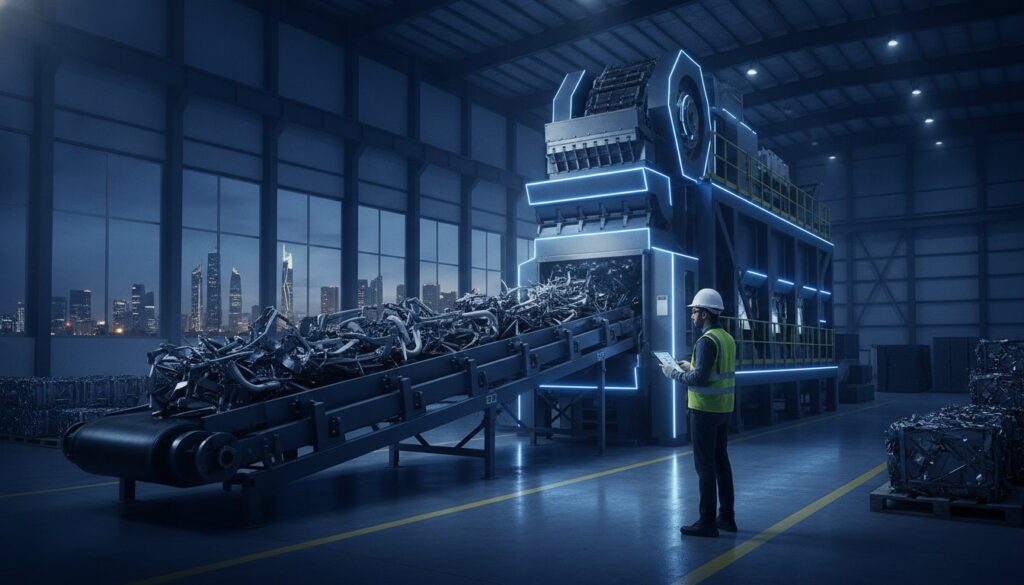
A standard scrap yard is a disposal site, but a high-capacity recovery facility is a precision-engineered laboratory for material sovereignty. For industrial leaders in the UAE, large scale metal recycling represents the difference between a costly liability and a strategic asset. You understand the immense pressure of managing massive decommissioning waste while ensuring full compliance with the upcoming October 2026 Digital Waste Tracking Regulations. It’s a high-stakes environment where inefficient recovery doesn’t just hurt the planet; it actively erodes your bottom line.
This article provides a technical deep dive into how industrial-scale metal recovery transforms oilfield waste and heavy machinery into high-value resources. You’ll gain a clear understanding of the industrial recycling lifecycle and the sophisticated engineering required to handle complex, hazardous equipment. We’ll explore the logistics of maximizing scrap value, the importance of physical segregation for 6-digit EWC codes, and how specialized components like tungsten carbide PDC drills are processed with systematic precision. By the end, you’ll have the knowledge needed to select a high-capacity partner capable of future-proofing your operations against shifting regulatory and economic landscapes.
Key Takeaways
- Understand the technical distinction between standard scrap yards and large scale metal recycling, focusing on how high-capacity shredding systems preserve material integrity.
- Learn the five-step industrial recovery cycle, utilizing spectrographic analysis to identify alloys and maximize the value of recovered resources.
- Navigate the logistical challenges of oilfield decommissioning by transforming heavy machinery and oil and gas equipment into high-value industrial inputs.
- Ensure full compliance with UAE national environmental standards and upcoming 2026 digital waste tracking mandates through rigorous, documented processing.
- Identify how integrated waste management supports corporate ESG reporting while securing the long-term efficiency of the global supply chain.
Defining Large-Scale Metal Recycling in the Industrial Landscape
Industrial operations don’t measure success in kilograms; they measure it in metric tons and regulatory compliance. Large scale metal recycling is defined by this massive operational volume and the sophisticated engineering required to manage it. While a local scrap yard might process household appliances, an industrial recovery facility handles decommissioned oil rigs, heavy manufacturing equipment, and sprawling infrastructure waste. This isn’t just about clearing space. It’s about a systematic approach to material reclamation that feeds directly back into the national supply chain.
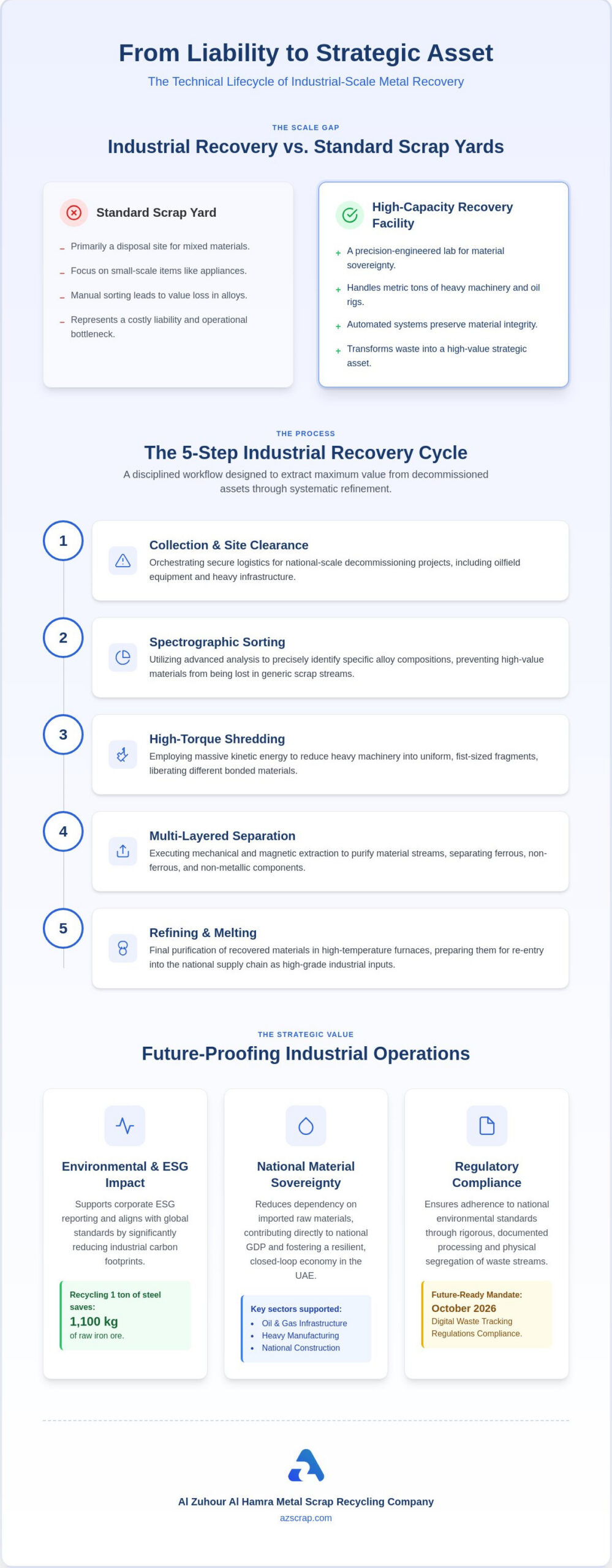
Defining Scrap Metal Recycling at this magnitude requires a shift from manual sorting to automated, high-capacity systems. Modern facilities utilize spectrographic analysis and industrial-grade shredders to identify and process alloys with surgical precision. This transition is essential for reducing the industrial carbon footprint. For instance, recycling one ton of steel saves 1,100 kg of iron ore, a critical metric for UAE firms looking to align with global ESG standards and local environmental mandates. Efficient reclamation cycles prevent the loss of value that occurs when complex machinery is sold as mixed scrap, ensuring every gram of high-value alloy is recovered.
Industrial vs. Residential Recycling: The Scale Gap
The gap between residential collection and industrial recovery is vast. Residential services focus on small-scale plastics or aluminum cans. In contrast, large scale metal recycling manages hundreds of metric tons of complex machinery. Standard balers cannot process the reinforced steel found in oilfield equipment or heavy-duty manufacturing lines. These assets require high-capacity shredding systems and specialized logistics to ensure safe transport and site clearance across the UAE. The complexity increases when dealing with hazardous or contaminated components that demand strict adherence to safety protocols. Managing these volumes requires a partner who understands the high-stakes nature of industrial decommissioning.
The Strategic Importance of Material Sovereignty
Recovered steel and specialized alloys are the backbone of UAE manufacturing. By prioritizing local recovery, the nation reduces its dependency on imported raw materials, fostering a more resilient economy. High-volume scrap management contributes directly to the national GDP by keeping valuable resources within the borders. This material sovereignty ensures that the steel used in a decommissioned offshore platform today becomes the structural support for a new infrastructure project tomorrow. It’s a closed-loop system that prioritizes long-term economic stability over short-term disposal gains. This approach isn’t just good for the environment; it’s a principled strategy for national growth.
The Mechanics of High-Capacity Metal Processing
Industrial recovery isn’t a singular event. It’s a disciplined workflow designed to extract maximum value from decommissioned assets through systematic refinement. This process follows a rigorous five-step industrial recovery cycle:
- Collection: Orchestrating secure logistics and national-scale site clearances.
- Sorting: Utilizing spectrographic analysis to identify specific alloy compositions.
- Shredding: Employing high-torque rotors to reduce heavy machinery into fragments.
- Separation: Executing multi-layered mechanical and magnetic extraction.
- Melting: Final refinement of purified streams in high-temperature furnaces.
This technical rigor is what distinguishes true large scale metal recycling from standard scrap collection. Precision begins at the sorting stage, where identifying the exact metallurgy of a component prevents high-value alloys from being lost in generic scrap streams. By treating waste as a technical resource, facilities can preserve the chemical integrity of the materials they recover.
The shredding phase is where physics meets operational efficiency. High-torque rotors utilize massive kinetic energy to reduce heavy machinery to fist-sized fragments. This process “liberates” different materials that were previously bonded, such as copper wiring inside steel housings. It’s a critical distinction in the industry. While baling merely compacts waste into dense cubes, shredding exposes every layer for precise sorting. Ferrous metals like iron and steel constitute the largest volume of global scrap. According to EPA Recycling Statistics, achieving high purity in these streams is vital for the smelting process and the subsequent quality of new steel products.
Advanced Shredding and E-Waste Processing
Industrial hardware often contains sensitive data or complex electronic components that require more than just disposal. Integrating industrial shredding services into your decommissioning strategy provides both material recovery and absolute data security. Physical destruction is the only certain method for clearing industrial hardware. This integrated approach ensures that every component, from heavy steel casings to circuit boards, is processed with systematic precision and total transparency.
Separation Technologies for Mixed Metal Scrap
Recovering mixed metal scrap requires high-speed differentiation between ferrous and non-ferrous streams. Magnetic drums extract iron and steel, while eddy current separators utilize electromagnetic induction to repel non-ferrous metals like aluminum and brass. Air classification plays a pivotal role by using controlled airflows to remove light contaminants like foam or plastic. These technologies allow facilities to achieve up to 99% purity in recovered material streams. If your facility generates high volumes of complex waste, exploring a more technical approach to machinery disposal can significantly increase your recovery yields and overall operational efficiency.
Specialized Recovery for Critical Sectors: Oil, Gas, and Infrastructure
Heavy industry operates on a plane of complexity that standard recycling facilities simply cannot navigate. In the UAE, the energy and construction sectors generate waste streams that require more than just high-volume capacity; they demand technical specialization. Large scale metal recycling for these sectors involves managing assets that have spent decades in extreme environments, often exposed to corrosive industrial chemicals or high-pressure drilling conditions. This isn’t a simple matter of disposal. It’s a disciplined engineering challenge that prioritizes safety, environmental integrity, and the recovery of high-value alloys.
Adhering to global Recycling Industry Standards is essential when processing decommissioned assets from the oil and gas sector. Equipment used in energy production often carries residues that require rigorous decontamination protocols before the material can enter the recovery cycle. Failure to manage these environmental safety protocols doesn’t just risk regulatory fines; it compromises the purity of the entire material stream. By treating these assets with systematic precision, industrial partners ensure that hazardous components are isolated while valuable metals are safely returned to the supply chain.
Oil and Gas Equipment Decommissioning
Decommissioning an offshore rig or an onshore production site involves the logistical orchestration of massive volumes of steel and specialized components. Drilling rigs, pipelines, and heavy-duty machinery are assemblies of complex alloys designed for durability. Within this recovery chain, certain components hold exceptional value. For example, tungsten carbide PDC drills represent a critical resource for reclamation. Recovering these specialized materials requires a deep understanding of metallurgy and the technical ability to separate high-wear alloys from the bulk steel structure. Managing manufacturing waste from energy sites also necessitates a secure chain of custody, ensuring that every ton of material is documented from the point of collection to the final melting phase.
Infrastructure and Demolition Scrap Management
National-scale construction projects across the UAE generate immense quantities of structural steel, rebar, and mixed industrial demolition waste. Coordinating the bulk removal of these materials requires a partner capable of managing national-scale transport and site clearances without disrupting ongoing operations. Efficiency in this area depends on early-stage planning and the integration of industrial material recovery services. Strategic site planning allows for the physical segregation of materials at the source, which is vital for meeting the 2026 Digital Waste Tracking Regulations. By processing rebar and structural components through high-capacity shredding systems, industrial leaders can maximize the value of their demolition scrap while supporting the national manufacturing sector’s need for high-quality recycled inputs.
The Strategic Value of Large-Scale Recycling for Corporate Compliance
Compliance in the UAE industrial sector has evolved from a checkbox exercise into a rigorous demand for operational transparency. With the October 2026 Digital Waste Tracking Regulations approaching, firms must adopt a centralized system for classifying and tracking scrap metal. Large scale metal recycling is no longer just about clearing floor space. It’s a critical component of a legal and ethical framework. Transitioning to a high-capacity recovery model ensures that your organization meets the requirement for physically segregated metals and specific 6-digit EWC codes, avoiding the substantial fines associated with non-compliance.
Documented recovery serves as the backbone of modern ESG (Environmental, Social, and Governance) reporting. Stakeholders and regulatory bodies now demand a clear chain of custody for every metric ton of industrial waste. Certified machinery disposal and e-waste processing mitigate significant liability risks, particularly when dealing with proprietary hardware or hazardous components. Beyond the legal mandate, there are clear economic incentives. Efficient reclamation cycles allow businesses to offset the rising costs of new raw materials by maximizing the value of their existing scrap streams. It’s a principled approach that balances fiscal responsibility with environmental stewardship.
Regulatory Excellence and Environmental Stewardship
Navigating the complexities of national compliance for both hazardous and non-hazardous metal waste requires technical expertise. Transparent audit trails are essential. They provide a verifiable record of material processing, ensuring that your operations remain resilient against tightening global environmental regulations. Future-proofing your business means partnering with a facility that understands the nuances of UAE law and international standards. This systematic precision protects your brand reputation while ensuring that your environmental impact is measured and minimized through disciplined recovery workflows.
Maximizing the Lifecycle of Industrial Assets
Obsolete machinery should not be viewed as a burden. It is a managed financial resource. The distinction between simple disposal and high-value material recovery lies in the precision of the process. While many firms lose value through inefficient scrap handling, a structured recovery plan identifies the metallurgical worth of every asset. Al Zuhour Al Hamra ensures the ethical disposal of manufacturing waste, transforming decommissioned equipment into high-purity resources for the global supply chain. To secure your operational footprint and ensure regulatory excellence, explore our comprehensive solutions for manufacturing waste management today.
Optimizing Your Industrial Waste Lifecycle with Al Zuhour Al Hamra
Al Zuhour Al Hamra Metal Scrap Recycling Company provides the infrastructure necessary for national-scale industrial recovery in the UAE. We don’t just collect scrap; we engineer integrated solutions that bridge the gap between oilfield decommissioning and high-capacity shredding. This systematic approach ensures that every ton of material is handled with the technical rigor your operations demand. By centralizing the recovery of heavy machinery and complex infrastructure waste, we provide a secure, transparent path for materials to re-enter the global supply chain. Our presence across the Emirates allows for seamless logistical coordination, ensuring that your site clearances are executed without operational delays.
Our expertise extends beyond standard ferrous metals into the recovery of rare alloys and high-wear components. We are a specialized supplier and recycler of tungsten carbide PDC drills, proving our deep technical understanding of the materials that drive the energy sector. This expertise is a cornerstone of our large scale metal recycling operations. We understand the chemical and physical properties of the assets we process, allowing us to maximize the value of your waste stream while ensuring specialized alloys are recovered with maximum purity. It’s an uncompromising standard that supports both your corporate fiscal goals and national resource security.
A Principled Approach to National Resource Management
Our commitment to environmental stewardship is reflected in our methodical, steady workflows. We act as a principled guardian for UAE firms, ensuring that every stage of material recovery meets international standards of regulatory excellence. This isn’t just about meeting a mandate; it’s about future-proofing the local economy. We provide the technical bridge that allows UAE-based manufacturing and energy firms to compete on a global stage by maintaining a resilient, local supply of high-purity recycled metals. Our processes are designed for transparency, providing you with the documented proof of recovery needed for modern ESG reporting.
Getting Started with Large-Scale Recovery
Initiating a high-capacity recovery program begins with a comprehensive site-wide waste audit. Our experts evaluate your current inventory of heavy machinery and manufacturing waste to identify latent value and compliance gaps. We then customize a recycling program that integrates seamlessly with your industrial workflows. Whether you’re managing a one-time decommissioning project or ongoing manufacturing output, our team provides the certified asset disposal and logistical support required for success. We focus on long-term industrial waste minimization, helping you turn a disposal cost into a managed financial resource through disciplined, professional management.
Future-Proofing Your Industrial Material Lifecycle
Managing the decommissioning of massive industrial assets requires more than just disposal; it demands a disciplined approach to material sovereignty. We’ve explored how precision engineering and high-capacity shredding transform complex waste into high-purity resources. As the October 2026 Digital Waste Tracking Regulations approach, the necessity for documented, systematic recovery becomes a non-negotiable standard for UAE firms. Large scale metal recycling is the strategic engine that drives this compliance while preserving the economic value of your infrastructure and heavy machinery.
Al Zuhour Al Hamra stands as an uncompromising partner in this transition. Our expertise encompasses certified Oil & Gas equipment decommissioning and the specialized supply of tungsten carbide PDC drills, backed by an extensive national UAE operational reach. We don’t just process scrap; we secure your supply chain and protect the local environment through rigorous technical standards. It’s time to move beyond simple disposal and embrace a lifecycle strategy that prioritizes long-term impact and operational clarity. Your commitment to efficiency today ensures a resilient and sustainable industrial footprint for the future.
Secure Your Industrial Recovery Strategy with Al Zuhour Al Hamra
Frequently Asked Questions
What defines ‘large-scale’ metal recycling compared to standard services?
Large scale metal recycling is defined by the processing of hundreds of metric tons of industrial assets rather than small-scale consumer scrap. It utilizes high-capacity shredding systems and spectrographic analysis to manage complex assemblies like oil rigs and heavy manufacturing lines. This industrial-grade approach ensures that high-value alloys are recovered with systematic precision, which standard scrap yards cannot achieve due to equipment limitations.
Can Al Zuhour Al Hamra handle specialized oil and gas equipment decommissioning?
Yes, we specialize in the technical recovery of oil and gas equipment, including drilling rigs, pipelines, and offshore structures. Our facility is equipped to process high-wear components such as tungsten carbide PDC drills, ensuring these valuable materials are returned to the supply chain. We maintain a secure chain of custody and follow rigorous environmental safety protocols for all assets exposed to industrial chemicals.
How does high-capacity shredding ensure industrial data security for e-waste?
High-capacity shredding provides absolute data security through the total physical destruction of industrial hardware. Circuit boards, hard drives, and proprietary control systems are reduced to unrecoverable fragments, making data retrieval impossible. This process is integrated into our broader recycling cycle, allowing for secure material recovery while mitigating the liability risks associated with sensitive corporate information.
What are the primary metals recovered from large-scale demolition projects?
Infrastructure and demolition projects primarily yield massive volumes of ferrous metals like structural steel and rebar. We also recover significant quantities of non-ferrous metals, including copper wiring, aluminum cladding, and brass fittings. Our separation technologies ensure these materials achieve up to 99% purity, making them high-value inputs for the national manufacturing sector and global smelting operations.
Does the company provide national coverage across the UAE for bulk scrap removal?
We provide comprehensive national coverage across all seven Emirates, orchestrating complex logistics for bulk scrap removal and site clearances. Our team manages the transport of massive decommissioning waste from remote oilfields and urban construction sites alike. This national reach ensures that UAE firms have a reliable, principled partner for large scale metal recycling regardless of their operational location.
How does industrial recycling impact a company’s ESG score in 2026?
Industrial recycling directly improves ESG scores by providing documented proof of material recovery and carbon footprint reduction. For instance, recycling one ton of steel saves 1,100 kg of iron ore, a metric that supports environmental stewardship goals. Compliance with the October 2026 Digital Waste Tracking Regulations further demonstrates corporate governance by ensuring all waste is classified with 6-digit EWC codes and processed ethically.
What happens to the recovered materials after the shredding process?
Recovered materials undergo a rigorous separation process using magnetic drums, eddy current separators, and air density techniques. Once purified into distinct streams, these metals are sent to high-temperature furnaces for melting and refinement. This systematic approach ensures that the chemical integrity of the alloys is preserved, allowing the materials to be repurposed into new industrial components or structural steel.
Are there specific UAE regulations for disposing of heavy machinery?
Yes, the 2026 Digital Waste Tracking Regulations mandate that all industrial suppliers provide physically segregated metals with specific 6-digit EWC codes. Disposing of heavy machinery now requires a centralized digital audit trail to ensure regulatory excellence and environmental compliance. Our processes are designed to meet these stringent UAE standards, protecting your organization from fines and ensuring a transparent material lifecycle.
