
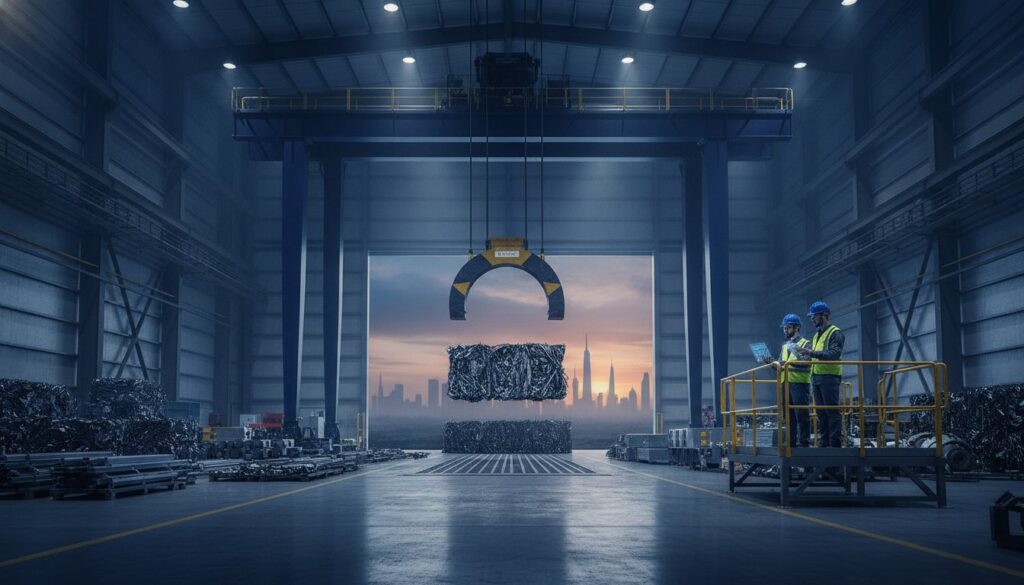
Your industrial scrap is no longer just a waste management hurdle; it’s a critical strategic asset in a market defined by the UAE’s 2026 export restrictions and new VAT frameworks. With the implementation of Customs Notice No. 13/2026, which enforces a temporary ban on the export of iron and steel scrap through October 8, 2026, the requirement for professional steel scrap recycling services has become an operational necessity. You recognize that the logistical complexity of removing heavy machinery or clearing demolition sites isn’t just a physical challenge. It’s a matter of navigating legal liabilities and ensuring every ton of material is managed under the highest regulatory standards.
This guide provides the clarity required to transform these operational burdens into a disciplined, value-driven workflow. You’ll learn how industrial-scale recycling optimizes resource efficiency, ensures rigorous regulatory compliance, and supports the long-term integrity of sustainable infrastructure. We will detail the sophisticated processes behind maximizing the recovery of specialized alloys and provide a roadmap for maintaining verified environmental documentation. From the nuances of the VAT Reverse Charge Mechanism introduced on January 14, 2026, to the systematic precision of large-scale shredding, this is the definitive framework for modern industrial waste management.
Key Takeaways
- Understand how integrating professional steel scrap recycling services into your operations transforms industrial waste into a high-value secondary raw material for the UAE’s circular economy.
- Identify the technical classifications of scrap, from Heavy Melting Steel to specialized alloys, to ensure maximum recovery value from decommissioned oil and gas infrastructure.
- Navigate the complex UAE legal framework to protect your organization from environmental liabilities through rigorous documentation and certified recovery processes.
- Implement disciplined on-site sorting protocols and safety standards to streamline the disposal of heavy machinery and demolition debris.
- Learn how a systematic approach to material recovery minimizes logistical complexity while maximizing the lifecycle value of industrial assets.
The Role of Steel Scrap Recycling Services in Industrial Infrastructure
Industrial steel is the silent engine of modern development. It’s not a byproduct to be discarded; it’s a high-value asset that requires systematic management. In a landscape where resource scarcity is a global concern, the implementation of professional steel scrap recycling services represents a commitment to both operational efficiency and ethical stewardship. By viewing scrap metal recycling as a strategic recovery process rather than a disposal task, industrial leaders can secure their supply chains against market fluctuations. This disciplined approach ensures that massive volumes of metal generated from oil and gas operations or manufacturing plants are treated as secondary raw materials rather than liabilities.
The UAE’s industrial sector is currently undergoing a structural shift toward a circular economy model. This framework prioritizes the retention of value within the domestic market, a goal that has become even more urgent following recent 2026 regulatory updates. Manufacturing waste management and demolition scrap management aren’t merely cleanup operations. They’re essential components of a national strategy to reduce environmental impact. Producing steel from recycled scrap consumes approximately 75% less energy than extracting and processing virgin iron ore. These efficiencies aren’t just environmental wins; they’re bottom-line imperatives for national infrastructure projects that demand high-grade materials at sustainable costs.
Ferrous Metals vs. Non-Ferrous Alloys
Distinguishing between metal types is the first step in effective valuation and recovery. Ferrous metals, primarily composed of iron, are recognized for their magnetic properties and immense tensile strength. Mild steel is the most common form found in structural beams, while carbon steel provides the hardness required for heavy machinery and industrial tools. Stainless steel, though technically ferrous, contains high levels of nickel and chromium to prevent oxidation in harsh environments. Ferrous scrap is the backbone of industrial recycling. Understanding these distinctions allows for precise sorting, which prevents the contamination of alloy batches and preserves the integrity of the recycled material.
The Lifecycle of Industrial Steel
The journey of industrial steel is a cycle of continuous transformation. It often begins as construction debris or decommissioned infrastructure from the energy sector. Through large-scale shredding and advanced separation techniques, these massive components are reduced to purified secondary raw materials. This mechanical breakdown facilitates efficient smelting, allowing the metal to be repurposed without losing its structural integrity. For national infrastructure project managers, this lifecycle provides a reliable stream of high-grade material that meets the stringent demands of 2026 engineering standards. Professional steel scrap recycling services manage this transition with meticulous care, ensuring that every ton of recovered metal contributes to the next generation of industrial growth.
Classifying Industrial Steel Scrap: Grades and Recovery Standards
Precision in classification is the foundation of professional steel scrap recycling services. It isn’t merely a matter of sorting; it’s a technical discipline that determines the secondary material’s utility in high-stakes manufacturing. Without rigorous grading, the integrity of the recovery stream is compromised, leading to inefficiencies in the smelting process and reduced material value. Industry leaders treat scrap as a strategic asset, requiring a systematic approach to identify, separate, and process various grades according to international density and thickness standards. This meticulous care ensures that recovered metals meet the uncompromising requirements of modern engineering.
Contamination standards represent a non-negotiable boundary in industrial recovery. The presence of non-metallic attachments, excessive rust, or volatile residues can disqualify entire batches of material. Maintaining high purity levels is essential for supporting steel’s role in the circular economy, as it allows for the seamless reintroduction of scrap into the production cycle. For organizations looking to optimize their yields, partnering with a provider that offers disciplined machinery disposal ensures that every component is evaluated with technical expertise.
Heavy Melting Steel (HMS) Categories
The distinction between HMS 1 and HMS 2 is defined by thickness and density. HMS 1 consists of heavy, wrought iron or steel scrap with a minimum thickness of 1/4 inch. It’s preferred for its high density and lack of black steel or galvanized components. In contrast, HMS 2 includes thinner materials, typically at least 1/8 inch thick, and may contain galvanized or blackened steel. Grading accuracy is vital because it dictates the charging speed and energy consumption of electric arc furnaces. Dense, clean scrap reduces melt times and improves overall operational throughput.
Specialized Material Recovery
Industrial operations in the energy sector generate scrap that far exceeds standard HMS specifications. Decommissioned oilfield infrastructure often contains high-tensile steels and specialized alloys designed for extreme environments. A critical focus of modern recovery involves the extraction of high-value components such as tungsten carbide pdc drills. These tools represent a significant concentration of value that requires specialized handling to prevent material loss. Processing industrial machinery components demands a deep understanding of metallurgy to ensure that specialized alloys are recovered without degradation, preserving their unique properties for future industrial applications.
Regulatory Compliance and Environmental Standards in the UAE
Adherence to the UAE’s legal framework is a non-negotiable standard for any organization utilizing steel scrap recycling services. As of 2026, the regulatory landscape has become significantly more rigorous, requiring industrial entities to maintain meticulous records of their waste streams. The implementation of Customs Notice No. 13/2026, which restricts scrap exports to bolster domestic supply, highlights the government’s proactive stance on material sovereignty. For corporate partners, this means that every ton of metal removed from a site must be accounted for through certified channels. Failure to demonstrate compliance doesn’t just result in financial penalties; it compromises an organization’s standing within the national industrial ecosystem.
Reporting standards for Environmental, Social, and Governance (ESG) goals now demand verifiable data rather than general estimates. Industrial firms are expected to provide transparent documentation regarding their material recovery rates and the diversion of manufacturing waste from national landfills. This level of transparency is essential for maintaining corporate integrity and securing the trust of global stakeholders. By integrating systematic recovery protocols, businesses ensure that their decommissioned assets are processed in a way that aligns with international environmental ethics and UAE federal mandates.
Liability Protection for Industrial Firms
Protecting a corporate entity from environmental liability requires a disciplined approach to chain-of-custody documentation. Professional scrap management provides a secure paper trail that validates the ethical disposal of materials, shielding firms during site clearance audits. This process is especially critical when handling branded or proprietary industrial assets. Secure destruction and recovery prevent proprietary machinery from entering secondary markets unauthorized, ensuring that your organization’s physical legacy is managed with absolute discretion. Furthermore, with the VAT Reverse Charge Mechanism in effect since January 14, 2026, accurate reporting of scrap transactions between VAT-registered businesses is a core requirement for tax compliance.
Environmental Impact of Industrial Shredding
High-capacity industrial shredding services are the primary engine for reducing the carbon footprint of the manufacturing sector. By processing heavy machinery and demolition debris into uniform fragments, the energy required for secondary smelting is drastically reduced. Systematic shredding reduces material volume at the source, which drastically minimizes the logistical energy consumption required for transport and downstream processing. This methodical reduction of waste ensures that industrial manufacturing waste is diverted from landfills, preserving natural resources and supporting the long-term health of the local environment. Every ton of recycled steel represents a measurable step toward a more resilient and sustainable industrial infrastructure.

Operational Best Practices for Large-Scale Steel Scrap Recovery
Large-scale recovery isn’t a passive cleanup. It’s an active logistical operation that requires systematic planning to avoid disrupting primary industrial functions. Effective steel scrap recycling services integrate directly into your facility’s daily workflow, establishing dedicated zones for sorting and collection. This prevents the accumulation of hazardous debris and ensures that high-value materials are isolated before they become contaminated by general waste. By utilizing high-capacity loaders and specialized shearing equipment, operators can process massive structural components on-site. This reduces the number of transport cycles required and enhances overall project speed.
Safety remains the paramount objective during any recovery phase. Handling decommissioned oilfield infrastructure or massive manufacturing machinery involves significant physical risks. Standardized protocols for lifting, cutting, and securing metal loads are essential to protect personnel and prevent equipment damage. A disciplined approach ensures that your site remains compliant with UAE safety audits while maintaining the momentum of your core operations. These standards are especially critical when managing the high-stakes environment of active industrial zones where multiple contractors operate simultaneously.
Site Management for Contractors
Integrating heavy equipment scrap management into project timelines is a critical requirement for modern contractors. During complex infrastructure demolition, mixed metal streams can quickly overwhelm a site if not managed with precision. Professional site clearance provides the expertise needed to categorize these materials in real-time. This methodical separation maximizes the recovery value of specialized alloys and ensures that the site is cleared efficiently. It allows the next phase of construction or decommissioning to proceed without delay. For organizations requiring expert oversight, our team provides comprehensive demolition scrap management to streamline your project’s final recovery phase.
Logistics and Transportation Standards
Logistics optimization is the final bridge between on-site recovery and industrial processing. Selecting the right transport equipment is vital for bulk metal removal. High-sided trailers and heavy-duty flatbeds must be deployed according to the density and dimensions of the scrap. Secure transit protocols ensure that industrial materials reach processing plants without environmental leakage or road safety incidents. Maximizing payload efficiency isn’t just about cost control; it’s a commitment to reducing transport-related emissions. By optimizing every load, industrial firms contribute to a more efficient global supply chain while meeting their own internal sustainability metrics. This steady, well-engineered flow of material defines a truly professional recovery operation.
Strategic Material Recovery with Al Zuhour Al Hamra
Al Zuhour Al Hamra operates as a disciplined guardian of industrial standards, providing national-scale steel scrap recycling services that prioritize operational clarity and ethical conviction. Our approach is rooted in the belief that industrial waste management is a high-stakes technical discipline. It requires more than simple collection; it demands a systematic recovery process that preserves the value of secondary raw materials while ensuring absolute regulatory compliance. By acting as a meticulous expert for our partners, we transform the logistical burden of scrap management into a streamlined, value-driven workflow that supports the integrity of the global supply chain.
Our commitment to transparency and regulatory excellence is non-negotiable. In an era defined by the UAE’s 2026 industrial mandates, we provide the verified documentation and chain-of-custody security that corporate entities require to mitigate legal liabilities. This rigorous technical oversight ensures that every action we take is the result of careful planning and uncompromising standards. Whether managing the specialized recovery of oil and gas infrastructure or executing large-scale machinery disposal, our team maintains a formal demeanor that reflects the serious nature of environmental stewardship and industrial efficiency.
Comprehensive Industrial Solutions
Our capabilities extend across a diverse range of specialized recovery sectors, ensuring that no material is left outside the circular economy. We provide high-capacity shredding services and certified e-waste recycling, alongside specialized expertise in high-value alloys. Our technical proficiency in recovering tungsten carbide pdc drills and other high-tensile components allows us to supply purified secondary materials back into the global manufacturing chain. This principled approach to material lifecycle management includes:
- Oil & Gas Equipment Recycling: Systematic decommissioning and recovery of specialized energy sector infrastructure.
- Manufacturing Waste Management: Disciplined protocols for handling high-volume industrial byproducts.
- Machinery Disposal: Secure and efficient removal of heavy industrial assets.
- Demolition Scrap Management: National-scale solutions for large-scale infrastructure and construction projects.
Partnering for a Sustainable Industrial Future
Professional recycling is a cornerstone of the UAE’s environmental vision, and Al Zuhour Al Hamra is proud to act as a bold innovator in this field. We develop customized recovery plans tailored to the specific needs of the corporate and energy sectors, ensuring that large-scale operations can meet their ESG targets with confidence. Our role as a sophisticated entity allows us to bridge the gap between industrial necessity and ecological responsibility. By refusing to cut corners, we provide a reliable and secure partnership for organizations that value long-term impact over short-term gains. We invite you to contact Al Zuhour Al Hamra for a formal industrial scrap assessment to secure your organization’s operational footprint and contribute to a more resilient industrial future.
Future-Proofing Industrial Material Recovery
Managing large-scale industrial assets in 2026 requires more than simple logistics; it demands a technical mastery of material grades and a deep commitment to regulatory transparency. You’ve seen how systematic sorting and high-capacity shredding transform decommissioned infrastructure into high-value secondary raw materials. By adhering to the UAE’s evolving export and VAT frameworks, your organization doesn’t just avoid liability; it actively contributes to a resilient, circular industrial economy. This transition from waste management to strategic asset recovery is essential for maintaining a competitive and compliant operational footprint.
Selecting the right steel scrap recycling services is a strategic decision that impacts your operational safety and environmental legacy. Al Zuhour Al Hamra stands as a disciplined partner, offering national-scale industrial shredding and recovery with a specific focus on the complex needs of the energy and manufacturing sectors. Our expertise in Oil & Gas equipment decommissioning ensures that even the most specialized alloys are recovered with precision and strict adherence to UAE environmental and safety standards. Contact Al Zuhour Al Hamra for Professional Industrial Scrap Management to secure your site and optimize your material recovery today. We look forward to engineering a more efficient future for your industrial operations.
Frequently Asked Questions
What types of industrial steel are most valuable for recycling?
High-tensile alloys and Heavy Melting Steel (HMS 1) represent the most significant recovery value in the industrial sector. Specialized materials like tungsten carbide from drilling tools and 18/8 stainless steel are also highly sought after due to their nickel and chromium content. These materials retain their structural properties throughout the recycling lifecycle, making them essential for high-precision manufacturing. Professional steel scrap recycling services focus on the meticulous separation of these grades to ensure maximum material integrity.
How do steel scrap recycling services ensure regulatory compliance in the UAE?
Professional providers maintain compliance by strictly adhering to UAE Customs Notice No. 13/2026 and Cabinet Resolution No. 105 of 2026. This includes managing the temporary ban on scrap exports and utilizing the VAT Reverse Charge Mechanism for registered businesses. By providing verified weight bridge certificates and environmental documentation, these services shield corporate entities from legal liabilities. They ensure every ton of material is processed within the domestic circular economy framework.
Can oil and gas drilling equipment be fully recycled?
Oil and gas drilling equipment can be effectively recycled when handled by technical experts. This machinery often contains high-value alloys such as tungsten carbide and specialized carbon steels designed for extreme pressure. The recovery process involves dismantling the equipment and using specialized shredding to separate distinct metal types. This ensures that even complex drilling components are returned to the supply chain as high-grade secondary raw materials for new infrastructure.
What is the difference between HMS 1 and HMS 2 scrap steel?
The primary distinction lies in thickness and density standards. HMS 1 consists of heavy wrought iron or steel with a minimum thickness of 1/4 inch; it’s generally free of galvanized or blackened steel. HMS 2 is thinner, with a minimum requirement of 1/8 inch, and may contain a higher percentage of non-ferrous attachments. Because HMS 1 is denser and cleaner, it offers higher efficiency during the smelting process in electric arc furnaces.
How does industrial shredding improve the material recovery process?
Industrial shredding transforms massive structural components into uniform, purified fragments. This mechanical process facilitates the separation of ferrous metals from non-metallic contaminants, significantly increasing the purity of the final output. By reducing the material size, shredding also optimizes smelting energy consumption, requiring approximately 75% less power than virgin ore processing. It’s a critical step in maximizing the recovery rate of large-scale manufacturing waste and clearing industrial sites efficiently.
What documentation should I expect from a professional recycling service?
You should expect comprehensive chain-of-custody documentation, including official weight bridge receipts and certificates of destruction for proprietary machinery. Professional steel scrap recycling services also provide environmental impact reports that detail the volume of material diverted from landfills. These documents are essential for internal audits and maintaining verified records for UAE regulatory bodies. They ensure that your organization’s waste management workflow is fully transparent and legally secure.
Is it possible to recycle e-waste alongside heavy metal scrap?
Integrated industrial providers can manage both e-waste and heavy metal scrap within a single waste management strategy. While the recovery processes differ, specialized facilities use distinct shredding and separation lines to handle electronic components and structural steel simultaneously. This streamlined approach reduces logistical complexity for the client. It ensures that hazardous materials found in electronics are safely isolated while the metallic housing is recovered for industrial reuse.
How does steel recycling impact a company’s ESG reporting?
Steel recycling provides quantifiable data for Environmental, Social, and Governance (ESG) reporting by measuring carbon footprint reductions and resource preservation. Every ton of recycled steel diverted from a landfill represents a measurable achievement in sustainable infrastructure development. These metrics allow companies to demonstrate their commitment to the UAE’s circular economy vision. It provides stakeholders with verified evidence of disciplined environmental stewardship and long-term operational responsibility.
